Lost Origin Card List: Check the Main Set, Secret Cards, and Trainer Gallery
Check the English Lost Origin card list: 196 main entries, 21 secret cards and 30 Trainer Gallery cards, with a copyable owned-and-missing worksheet.
By Folidx Team
Open the official English Lost Origin checklist PDF first. It covers 001 to 196. For the rest of the numbered list, use the 197 to 217 entries in Pokellector’s Lost Origin directory and the separate 30-card Trainer Gallery list. Keep those sections separate when marking what you own.
Below is a number-and-name index for all three sections, followed by a worksheet you can copy. You do not need an account or an app to use it.
Open the English Lost Origin list first
This guide concerns the physical English Sword & Shield: Lost Origin expansion. It does not combine Japanese releases or Pokémon TCG Pocket cards with that list. Check the expansion and language of your cards before starting.
The one-page official PDF runs from 001 Oddish to 196 Volo. It supplies card names, collector numbers, rarity symbols and finish checkboxes. Its legend distinguishes standard set, standard set foil and parallel set. Use the colored PDF rather than a text-only copy: the box colors distinguish these finishes. This PDF does not list the overnumbered secret cards or Trainer Gallery.
Choose a completion rule before ticking boxes. You might want one matching copy per number, or you might want particular finishes as separate targets. Write that rule on your sheet so an extra copy does not change what “complete” means.
A reader-usable numbered card index
The main-set index follows the official English checklist, cross-checked against Pokellector’s Lost Origin directory. Leading zeros are retained for filing. This index gives identities, not finish availability; use the PDF’s colored boxes for that.
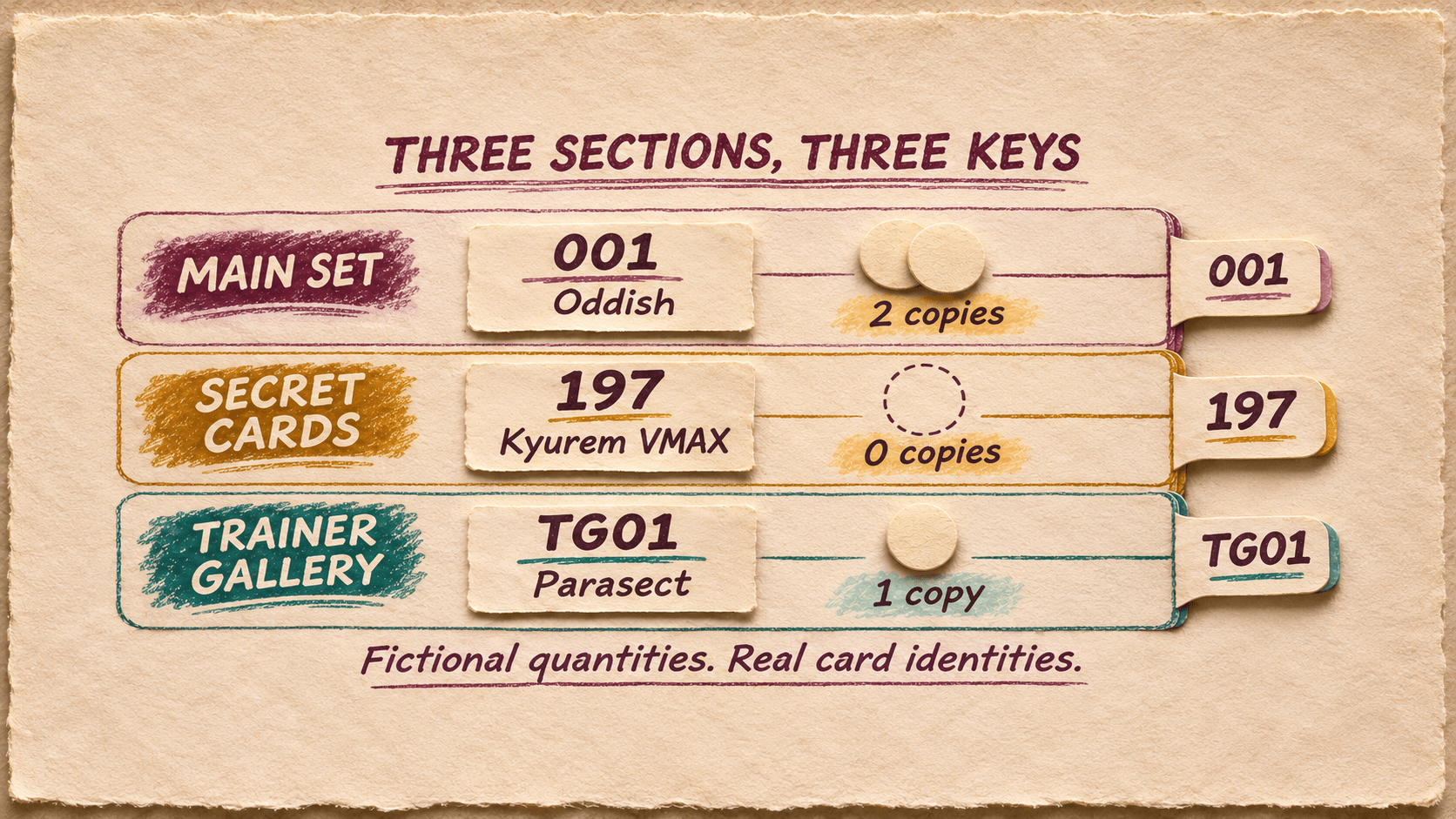
Illustrated scope example. The identities are sourced; the quantities are fictional. Each section retains its own identity key.
Main numbered cards: 001 to 196
| No. | Card name | No. | Card name |
|---|---|---|---|
| 001 | Oddish | 099 | Meditite |
| 002 | Gloom | 100 | Medicham |
| 003 | Vileplume | 101 | Relicanth |
| 004 | Paras | 102 | Gastrodon |
| 005 | Parasect | 103 | Mienfoo |
| 006 | Wurmple | 104 | Mienshao |
| 007 | Silcoon | 105 | Landorus |
| 008 | Beautifly | 106 | Binacle |
| 009 | Cascoon | 107 | Barbaracle |
| 010 | Dustox | 108 | Carbink |
| 011 | Seedot | 109 | Rockruff |
| 012 | Nuzleaf | 110 | Falinks |
| 013 | Shiftry | 111 | Stonjourner |
| 014 | Roselia | 112 | Spinarak |
| 015 | Roserade | 113 | Ariados |
| 016 | Phantump | 114 | Murkrow |
| 017 | Trevenant | 115 | Honchkrow |
| 018 | Blipbug | 116 | Seviper |
| 019 | Dottler | 117 | Spiritomb |
| 020 | Orbeetle | 118 | Drapion V |
| 021 | Slugma | 119 | Drapion VSTAR |
| 022 | Magcargo | 120 | Darkrai |
| 023 | Torkoal | 121 | Inkay |
| 024 | Litwick | 122 | Hoopa |
| 025 | Lampent | 123 | Radiant Hisuian Sneasler |
| 026 | Chandelure | 124 | Radiant Steelix |
| 027 | Delphox V | 125 | Bronzor |
| 028 | Litleo | 126 | Bronzong |
| 029 | Pyroar | 127 | Galarian Stunfisk |
| 030 | Poliwag | 128 | Magearna |
| 031 | Poliwhirl | 129 | Galarian Perrserker V |
| 032 | Politoed | 130 | Giratina V |
| 033 | Seel | 131 | Giratina VSTAR |
| 034 | Dewgong | 132 | Goomy |
| 035 | Horsea | 133 | Hisuian Sliggoo |
| 036 | Seadra | 134 | Hisuian Goodra |
| 037 | Kingdra | 135 | Hisuian Goodra V |
| 038 | Luvdisc | 136 | Hisuian Goodra VSTAR |
| 039 | Shellos | 137 | Pidgeot V |
| 040 | Finneon | 138 | Lickitung |
| 041 | Lumineon | 139 | Lickilicky |
| 042 | Snover | 140 | Porygon |
| 043 | Abomasnow | 141 | Porygon2 |
| 044 | Hisuian Basculin | 142 | Porygon-Z |
| 045 | Hisuian Basculegion | 143 | Snorlax |
| 046 | Ducklett | 144 | Aipom |
| 047 | Swanna | 145 | Ambipom |
| 048 | Kyurem V | 146 | Hisuian Zoroark V |
| 049 | Kyurem VMAX | 147 | Hisuian Zoroark VSTAR |
| 050 | Cramorant | 148 | Bouffalant |
| 051 | Glastrier | 149 | Komala |
| 052 | Pikachu | 150 | Skwovet |
| 053 | Raichu | 151 | Greedent |
| 054 | Electrike | 152 | Arc Phone |
| 055 | Manectric | 153 | Arezu |
| 056 | Magnezone V | 154 | Box of Disaster |
| 057 | Magnezone VSTAR | 155 | Colress’s Experiment |
| 058 | Rotom V | 156 | Damage Pump |
| 059 | Tynamo | 157 | Fantina |
| 060 | Eelektrik | 158 | Iscan |
| 061 | Eelektross | 159 | Lady |
| 062 | Clefairy | 160 | Lake Acuity |
| 063 | Clefable | 161 | Lost City |
| 064 | Gastly | 162 | Lost Vacuum |
| 065 | Haunter | 163 | Mirage Gate |
| 066 | Gengar | 164 | Miss Fortune Sisters |
| 067 | Mr. Mime | 165 | Panic Mask |
| 068 | Jynx | 166 | Riley |
| 069 | Radiant Gardevoir | 167 | Thorton |
| 070 | Sableye | 168 | Tool Box |
| 071 | Mawile | 169 | Volo |
| 072 | Shuppet | 170 | Windup Arm |
| 073 | Banette | 171 | Gift Energy |
| 074 | Cresselia | 172 | Hisuian Electrode V |
| 075 | Hisuian Zorua | 173 | Delphox V |
| 076 | Hisuian Zoroark | 174 | Kyurem V |
| 077 | Inkay | 175 | Magnezone V |
| 078 | Malamar | 176 | Rotom V |
| 079 | Comfey | 177 | Rotom V |
| 080 | Mimikyu | 178 | Enamorus V |
| 081 | Spectrier | 179 | Aerodactyl V |
| 082 | Enamorus V | 180 | Aerodactyl V |
| 083 | Hisuian Growlithe | 181 | Gallade V |
| 084 | Hisuian Arcanine | 182 | Drapion V |
| 085 | Poliwrath | 183 | Galarian Perrserker V |
| 086 | Machop | 184 | Galarian Perrserker V |
| 087 | Machoke | 185 | Giratina V |
| 088 | Machamp | 186 | Giratina V |
| 089 | Rhyhorn | 187 | Hisuian Goodra V |
| 090 | Rhydon | 188 | Pidgeot V |
| 091 | Rhyperior | 189 | Arezu |
| 092 | Aerodactyl V | 190 | Colress’s Experiment |
| 093 | Aerodactyl VSTAR | 191 | Fantina |
| 094 | Sudowoodo | 192 | Iscan |
| 095 | Gligar | 193 | Lady |
| 096 | Gliscor | 194 | Miss Fortune Sisters |
| 097 | Makuhita | 195 | Thorton |
| 098 | Hariyama | 196 | Volo |
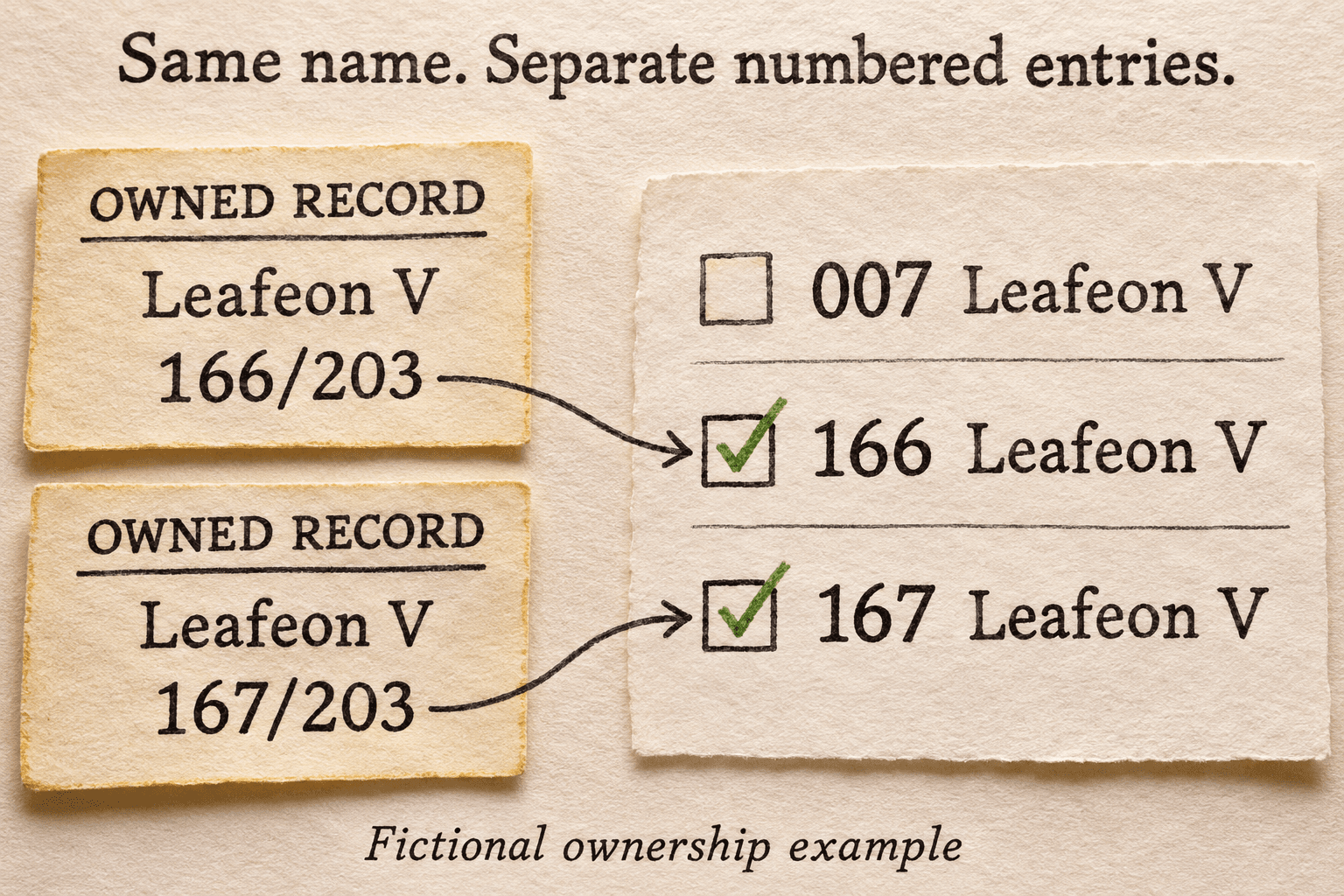
The repeated names are intentional. For example, 077 Inkay and 121 Inkay are separate entries, as are 130 Giratina V, 185 Giratina V and 186 Giratina V. Match the printed number as well as the name; do not merge these rows. See the official numbered list.
Overnumbered secret cards: 197 to 217
These 21 entries sit beyond the main numbered run ending at 196. Their number-and-name mapping comes from the Lost Origin specialist directory. They have their own rows even when the name appears earlier.
| No. | Card name |
|---|---|
| 197 | Kyurem VMAX |
| 198 | Magnezone VSTAR |
| 199 | Aerodactyl VSTAR |
| 200 | Drapion VSTAR |
| 201 | Giratina VSTAR |
| 202 | Hisuian Goodra VSTAR |
| 203 | Hisuian Zoroark VSTAR |
| 204 | Arezu |
| 205 | Colress's Experiment |
| 206 | Fantina |
| 207 | Iscan |
| 208 | Lady |
| 209 | Miss Fortune Sisters |
| 210 | Thorton |
| 211 | Volo |
| 212 | Giratina VSTAR |
| 213 | Hisuian Zoroark VSTAR |
| 214 | Box of Disaster |
| 215 | Collapsed Stadium |
| 216 | Dark Patch |
| 217 | Lost Vacuum |
Keep Trainer Gallery in its own numbered section
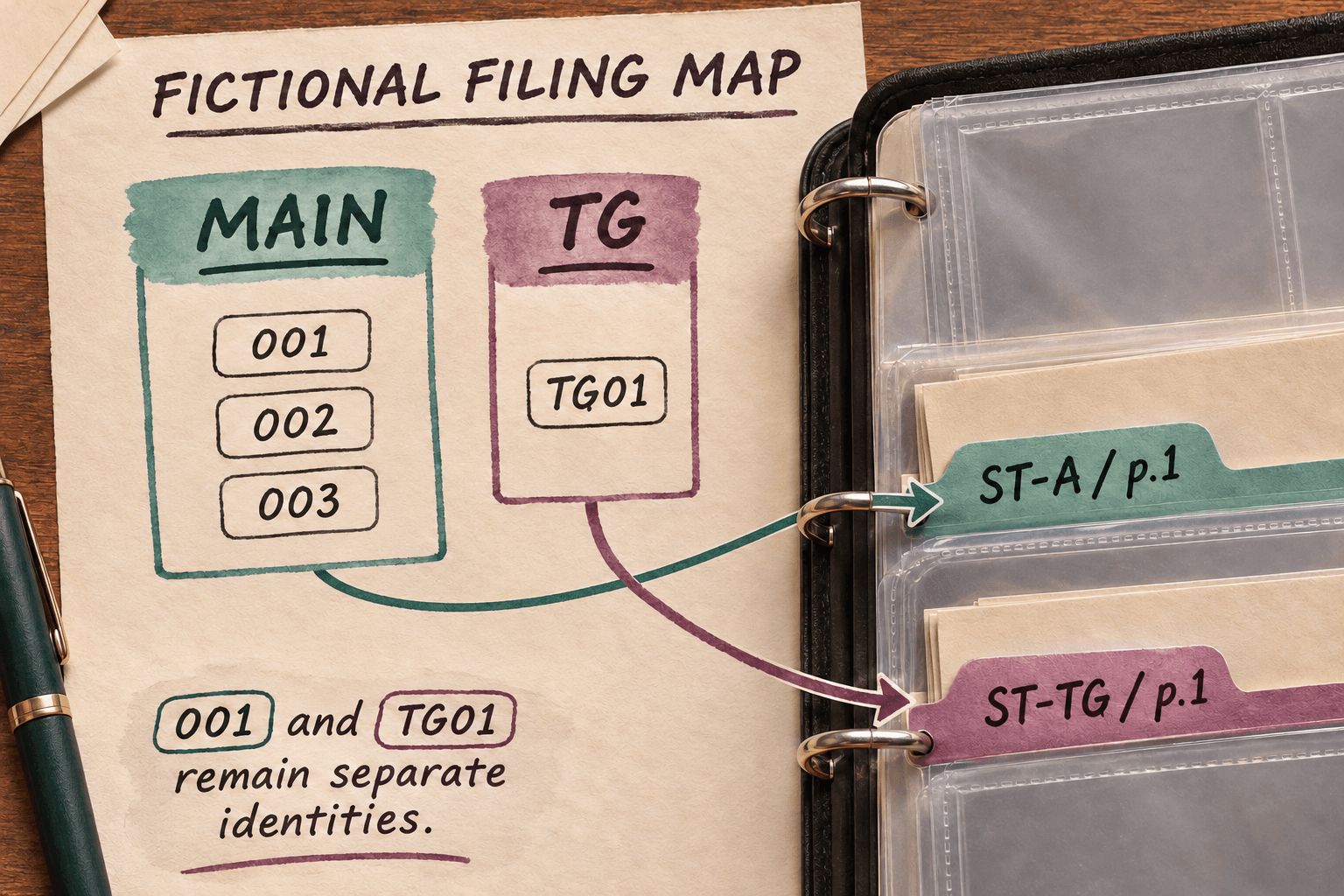
The Lost Origin Trainer Gallery directory lists 30 cards. Keep the TG prefix: TG01 Parasect is a different entry from 005 Parasect in the main set. The directory displays TG1, TG2 and so on; the index below pads the numeric part to two digits for consistent filing.
| No. | Card name | No. | Card name |
|---|---|---|---|
| TG01 | Parasect | TG16 | Pikachu V |
| TG02 | Roserade | TG17 | Pikachu VMAX |
| TG03 | Charizard | TG18 | Enamorus V |
| TG04 | Chandelure | TG19 | Gallade V |
| TG05 | Pikachu | TG20 | Crobat V |
| TG06 | Gengar | TG21 | Eternatus V |
| TG07 | Banette | TG22 | Eternatus VMAX |
| TG08 | Hisuian Arcanine | TG23 | Adventurer's Discovery |
| TG09 | Spiritomb | TG24 | Boss's Orders |
| TG10 | Snorlax | TG25 | Cook |
| TG11 | Castform | TG26 | Kabu |
| TG12 | Orbeetle V | TG27 | Nessa |
| TG13 | Orbeetle VMAX | TG28 | Opal |
| TG14 | Centiskorch V | TG29 | Pikachu VMAX |
| TG15 | Centiskorch VMAX | TG30 | Mew VMAX |
Mark owned, missing, and not-applicable separately
Copy this worksheet into a document or spreadsheet. Use one row per identity and chosen finish. Add a second row when you decide to collect another verified finish of the same numbered card.
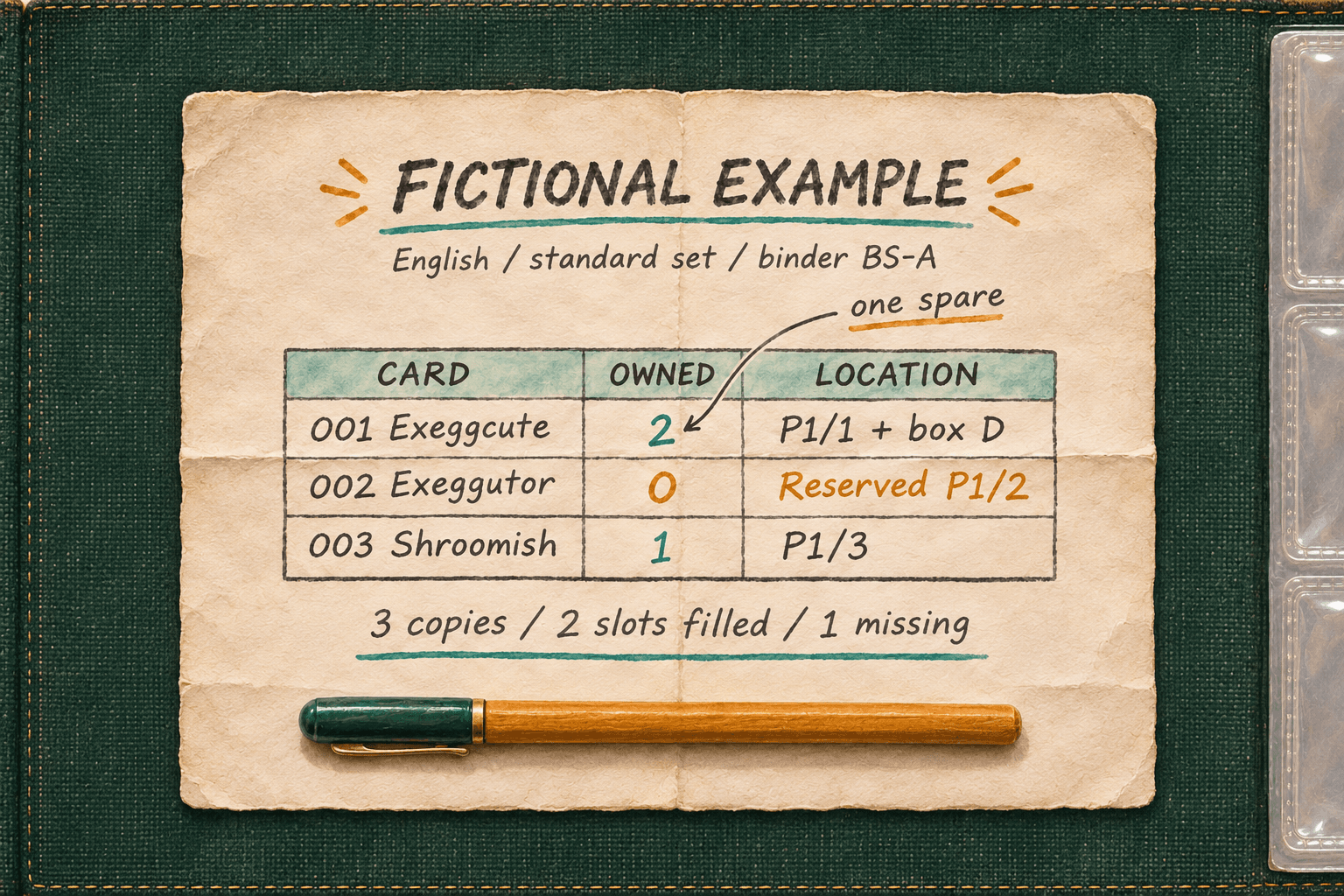
Fictional example: this collector wants standard-set Oddish and Gloom, plus standard-set foil Vileplume. Card names and numbers are real and checked against the official PDF. All quantities, ownership states and locations below are invented to demonstrate the method.
| Set/subset | Collector number | Name | Chosen finish | Owned quantity | Missing status | Location |
|---|---|---|---|---|---|---|
| Lost Origin main | 001 | Oddish | Standard set | 2 | No | Binder LO-A, page 1, pocket 1; spare in Trade Box T1 |
| Lost Origin main | 002 | Gloom | Standard set | 0 | Yes | Unfilled target; no owned-card location |
| Lost Origin main | 003 | Vileplume | Standard set foil | 1 | No | Binder LO-A, page 1, pocket 3 |
There are three physical cards covering two of the three target rows. The extra Oddish raises quantity to two; it does not fill the Gloom row. Two photographs of the same Oddish would still represent one physical copy, so count the cards themselves before entering quantity.
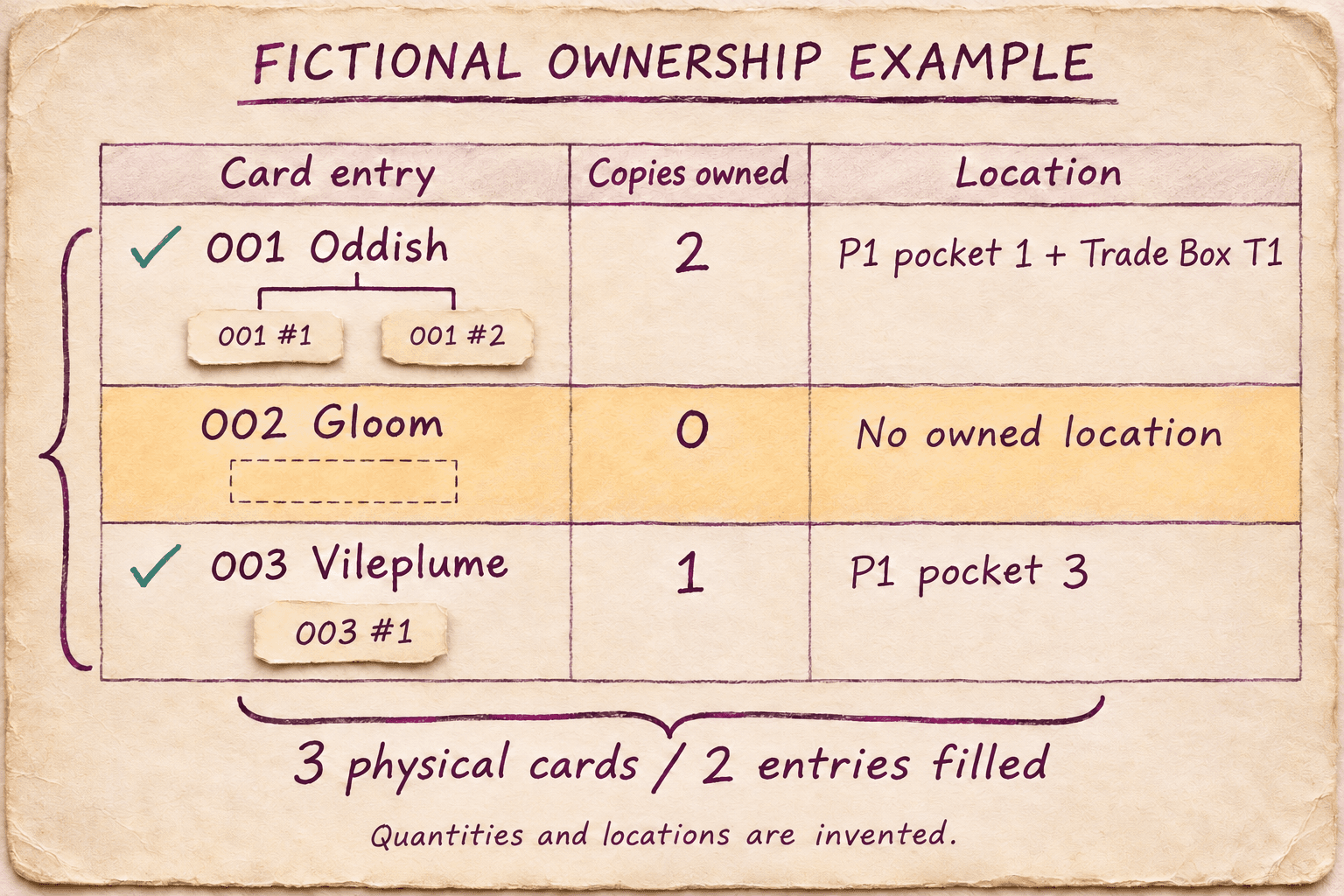
Three physical cards fill two of the three target rows. Gloom remains missing. In this example, P1 means page 1 of Binder LO-A; the spare Oddish lives in Trade Box T1.
Use these status labels consistently:
- Owned: at least one physical copy matches the row’s expansion, language, number and chosen finish.
- Missing: the row belongs to your stated goal and you have confirmed that you own no matching copy.
- Unresolved: the card or quantity needs review. Do not convert uncertainty into either “owned” or “missing.”
- Not applicable: the finish is outside your goal, or you have verified that it does not apply to that entry. Keep those two reasons distinguishable in a note.
An empty cell alone does not establish that a variant exists. Check the source’s legend and the entry before adding a finish to your want list. Keep optional promos and special finishes outside your total unless you name and source them as extra targets.
For a worksheet that includes every numbered entry in this guide, copy the main, secret and TG indexes into separate sections, then add the worksheet columns. Keep all your target rows in the checklist, including the ones with zero copies. Use the owned-card archive to record what you actually have.
Review a photo against the checklist before filing
For each card, read the following from the physical copy and a clear photograph:
- Expansion: confirm that it belongs to Lost Origin using the checklist and card reference, rather than a name search alone.
- Collector number: include the denominator where visible, or the TG prefix for a gallery card. Keep 001 and TG01 as different keys.
- Language: match the English list used here. Keep another language in a separately labeled section.
- Finish: compare the physical card under a change in light, then check that the chosen finish applies to the numbered entry.
If glare hides the number or the finish remains unclear, leave the row unresolved and take another photograph. Do not guess an exact card from its Pokémon name. The official Lost Origin list itself includes repeated names at different numbers.
A checklist match is an identification step. It does not authenticate a card or assign a professional condition grade.
Record where an owned card actually lives
Keep a location that leads back to the physical copy. In the fictional example, “Binder LO-A, page 1, pocket 3” points to the owned Vileplume. The Gloom row has no owned location. If you reserve a binder pocket for it, label that as a planned slot rather than evidence of ownership.
For two copies stored apart, keep both locations. If you move the spare Oddish into a trade binder, update its location without changing the status of another numbered entry. For a broader binder and box system, see How to Organize Pokémon Cards.
If you want a photo-based record alongside the sheet, Folidx’s TCG card binder page describes editable reports, draft card identification from photos, and archive books and pages that mirror physical binders. Review the identification before filing, and retain your pocket note with the record.
Keep the complete target list and missing-card comparison in your own worksheet. This workflow does not assume that Folidx imports the Lost Origin list or calculates set completion.
Check a likely duplicate before a trade or purchase
Compare the card with your existing row: expansion, language, collector number and finish. A second 001 Oddish is an extra copy of that identity; it is not 002 Gloom. Two cards with the same name may still have different collector numbers, as the indexes above show.
Then check the physical count and location. A matching photo may be an older picture of the same copy, while an extra card may be stored outside the main binder. If a trade leaves you with no matching copy of a target row, update both the owned quantity and missing status.
For an optional archive check, Folidx describes likely duplicate matches based on images and identified cards, with confidence levels. Treat a match as a prompt to compare the details yourself. The public page describes a helper signal, not a guarantee, and says Folidx does not list live market prices.
What this checklist counts
The counts below describe numbered identities, with finishes left out of the arithmetic.
| Scope | Entries | Basis |
|---|---|---|
| Main numbered run | 196 | 001 Oddish through 196 Volo in the official English PDF |
| Overnumbered secret cards | 21 | 197 Kyurem VMAX through 217 Lost Vacuum in the Lost Origin directory |
| Trainer Gallery | 30 | TG01 Parasect through TG30 Mew VMAX in the separate gallery directory |
If your goal is one copy of each listed identity across all three sections, the working total is 247 entries: 196 + 21 + 30. That is not a universal “master set” total. Separate finish targets, promos or other additions require their own scope and supporting evidence.
Do not stop at 196 if secret cards are part of your goal, and keep the TG prefix when including the gallery. Lost Zone gameplay references do not create another numbered subset or replace the printed card identity. This checklist makes no claim about pull rates.
If you meant the other expansion, use the English Scarlet & Violet 151 checklist guide instead of combining its cards with Lost Origin.
Start with one card you own: match it to the sourced list, review its details and record its physical location. You can keep that record on your worksheet or use Folidx’s editable card archive alongside it.
Sources
- Pokémon: official English Sword & Shield: Lost Origin card checklist, main entries 001 to 196 and the finish/rarity legend.
- Pokellector: Lost Origin expansion directory, main-entry cross-check and secret entries 197 to 217.
- Pokellector: Lost Origin Trainer Gallery directory, separate TG number/name index.
- Folidx: TCG card binder, public descriptions of editable records, binder/page organization and likely duplicate checks.