What Is a Proof Coin? Mirror Finishes, Cameo, and Proof Sets
Proof coins explained: a minting process, not a condition grade. How proofs are struck, cameo and reverse proof looks, proof vs uncirculated, and PR-70 labels.
What Is a Proof Coin? Mirror Finishes, Cameo, and Proof Sets
A proof coin is a coin made with a special minting process for collectors. The word "proof" describes how the coin was struck, not its condition. That single distinction clears up most of the confusion around proof coins, proof sets, and labels like PR-70.
What is a proof coin?
A proof coin is a specially made collector coin that a mint produces with extra care at every stage: polished blanks, polished dies, and two or more strikes per coin. Historically, proofs were early samples struck to check the dies and for archival purposes; in modern times, mints strike them in larger numbers and sell them to collectors, often grouped into annual proof sets. Merriam-Webster's entry for "proof coin" captures the same idea: a coin struck with polished dies that is not intended for circulation.
Two things follow from this. First, you will not find proof coins in your change, because mints sell them directly to collectors. Second, a proof coin can still be worn, cleaned, or damaged. The process label survives; the condition does not automatically. Grading services grade proofs on their own scale, which is where labels like PR-70 come from.
How proof coins are made
The process is what gives a proof coin its look. In simplified form, it has four steps:
- Polished blank. The planchet, the metal disc that becomes a coin, is polished to a high shine before striking.
- Polished dies. The dies, the stamped metal tools that press the design, are polished by hand or treated so parts of the design take on a frosted texture.
- Multiple strikes. Each blank is struck two or more times under high pressure so the finest details of the die transfer fully. Most proof coins are then handled individually instead of being dropped into bins.
- Finished proof. The result combines mirror-like flat areas, called fields, with frosted raised design, called relief or devices.
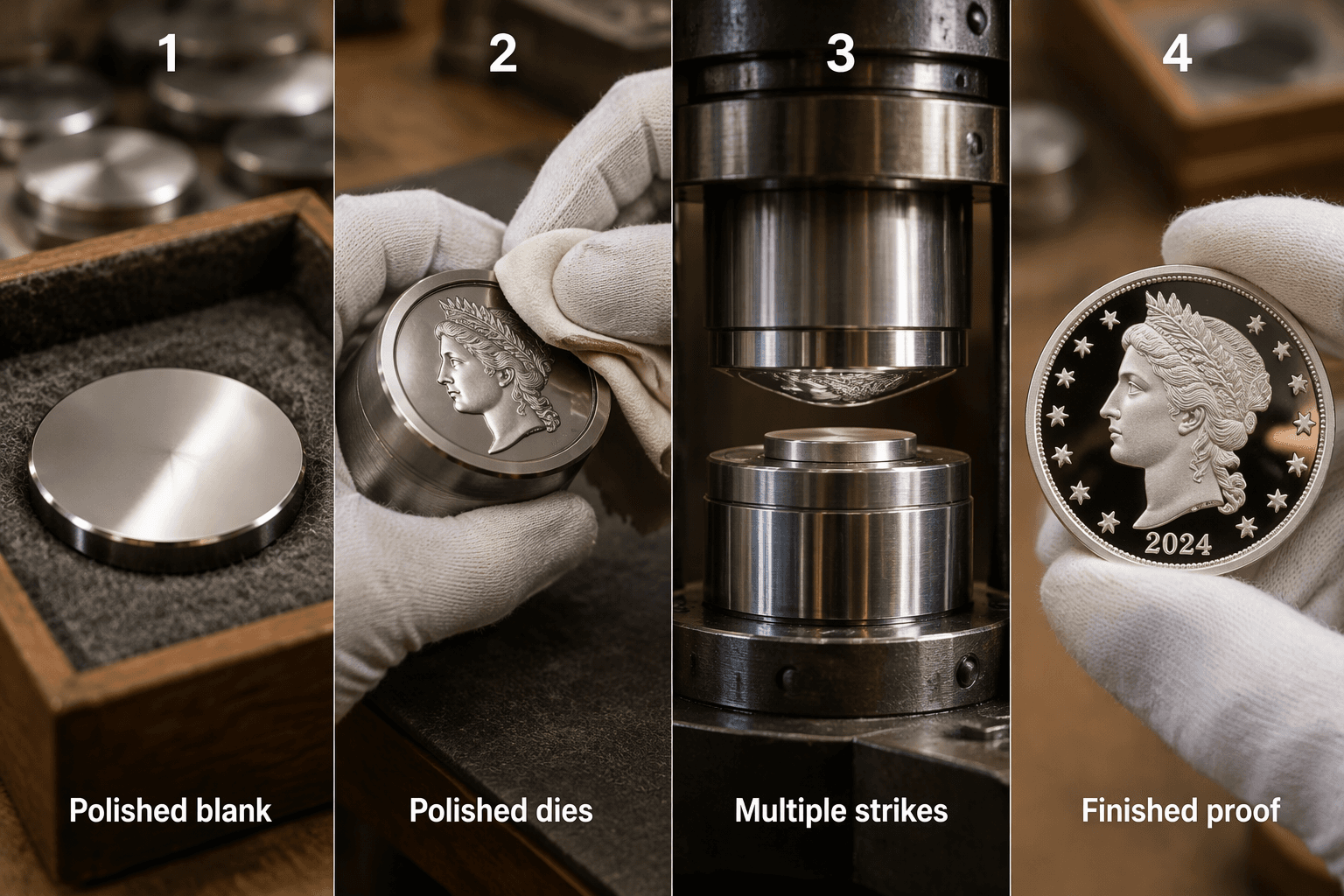
The mirror fields and frosted relief together create the visual signature that most people recognize on a proof coin. If you want the vocabulary for the parts of a coin mentioned here, the guide to obverse and reverse covers fields, relief, and edges in more detail.
Proof vs uncirculated: the one-line difference
Uncirculated describes a coin that left the mint in ordinary business-strike condition and never entered circulation. Proof describes the special process the coin went through. One is about circulation history; the other is about how the coin was made.
| Aspect | Uncirculated coin | Proof coin |
|---|---|---|
| What the word describes | A business-strike coin that never circulated | A coin made with the collector minting process |
| Surface look | Frosty, satiny luster | Mirror fields with frosted relief (usually) |
| Striking | Struck once | Struck two or more times on polished planchets |
| Where you get one | Banks, circulation, and mint sets | Sold by mints to collectors, often in proof sets |
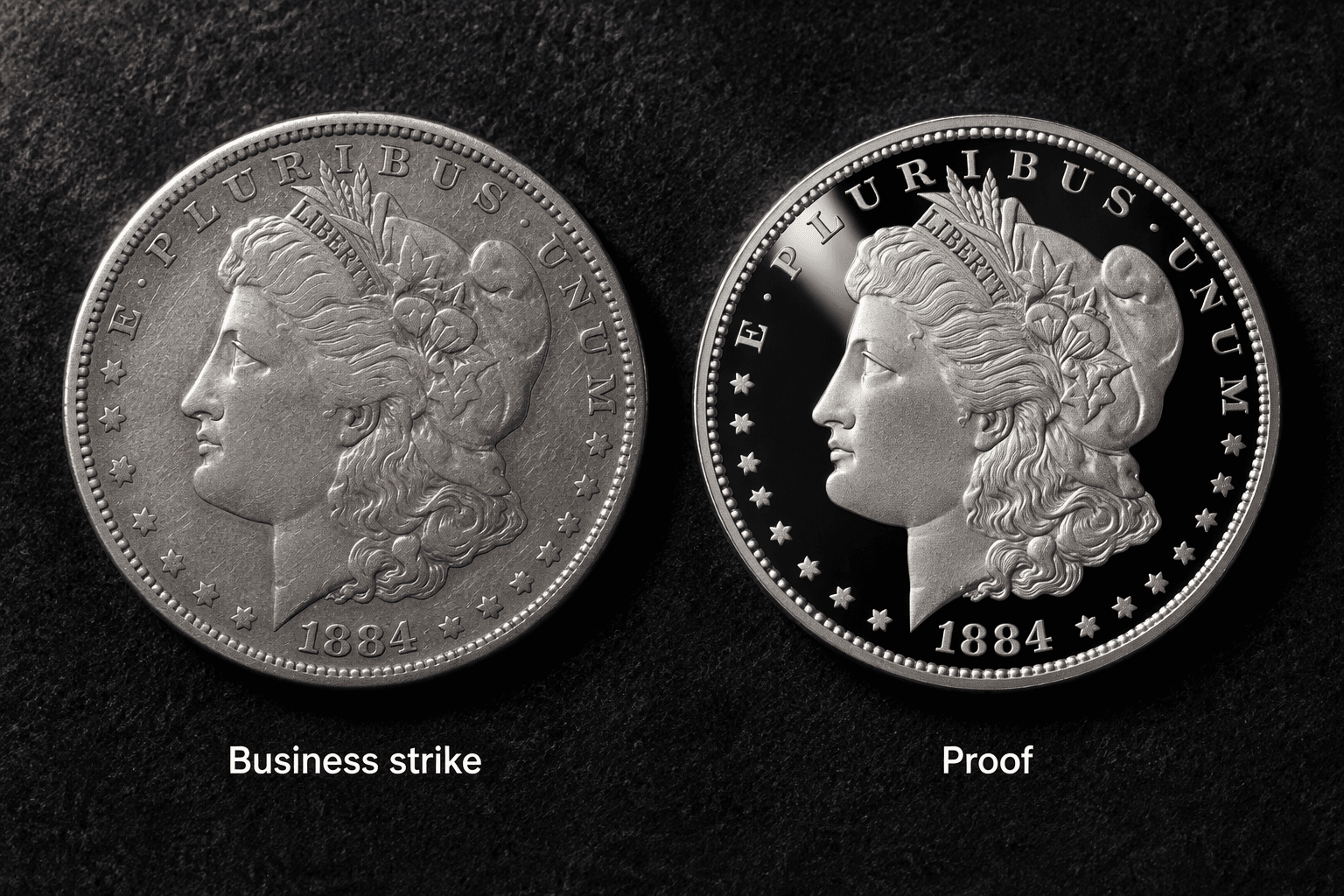
Tilt both coins under a lamp and the difference shows immediately: the proof's flat background throws back a single reflected streak of light, while the ordinary strike scatters light across a satin surface.
Cameo, deep cameo, and reverse proof
These terms describe the contrast between a proof's frosted design and its mirror fields:
- Cameo. The raised design looks frosted and cloudy against the mirror background, so the portrait appears to float. On older United States proofs this contrast can be soft.
- Deep cameo. The frosted design stands out in strong contrast against deeply reflective fields. Collectors treat this as a separate look worth noting in records.
- Reverse proof. The treatment is inverted: the raised design is mirror-like while the fields are frosted. It reads as the negative image of a standard proof.
All three are surface appearances, not separate grades. The same proof coin can be graded PR-69 with a deep cameo designation, for example.
Reading a PR-70 label
A label like PR-70 or PF-70 has two parts, and mixing them up is the most common beginner mistake:
- The PR or PF prefix tells you the strike type: the coin was made as a proof. It is a process label.
- The number is the condition grade on the 1-to-70 scale, where PR-70 is a perfect example and PR-69 or lower reflects some deficiency in strike, centering, or surface detail.
So a PR-66 coin is a proof that grades 66 for condition; "proof" says nothing by itself about how well the coin survived. If you want the full walk-through of how graders assign those numbers, see Coin Grading Explained: What the Sheldon Scale Actually Means.
How to identify and record a proof coin
When you hold a coin and want to decide whether it is a proof, three visual checks cover most modern coins:
- Look for the mirror. Tilt the coin under a directed light. A proof's fields reflect light like a dark mirror; a business strike scatters it.
- Check the relief contrast. On a proof, the raised design usually appears frosted next to those mirror fields. That combination is the cameo effect.
- Check the box and certificate. Modern proofs ship in protective cases with presentation packaging and often a certificate of authenticity. Match the coin to its packaging before you separate them.
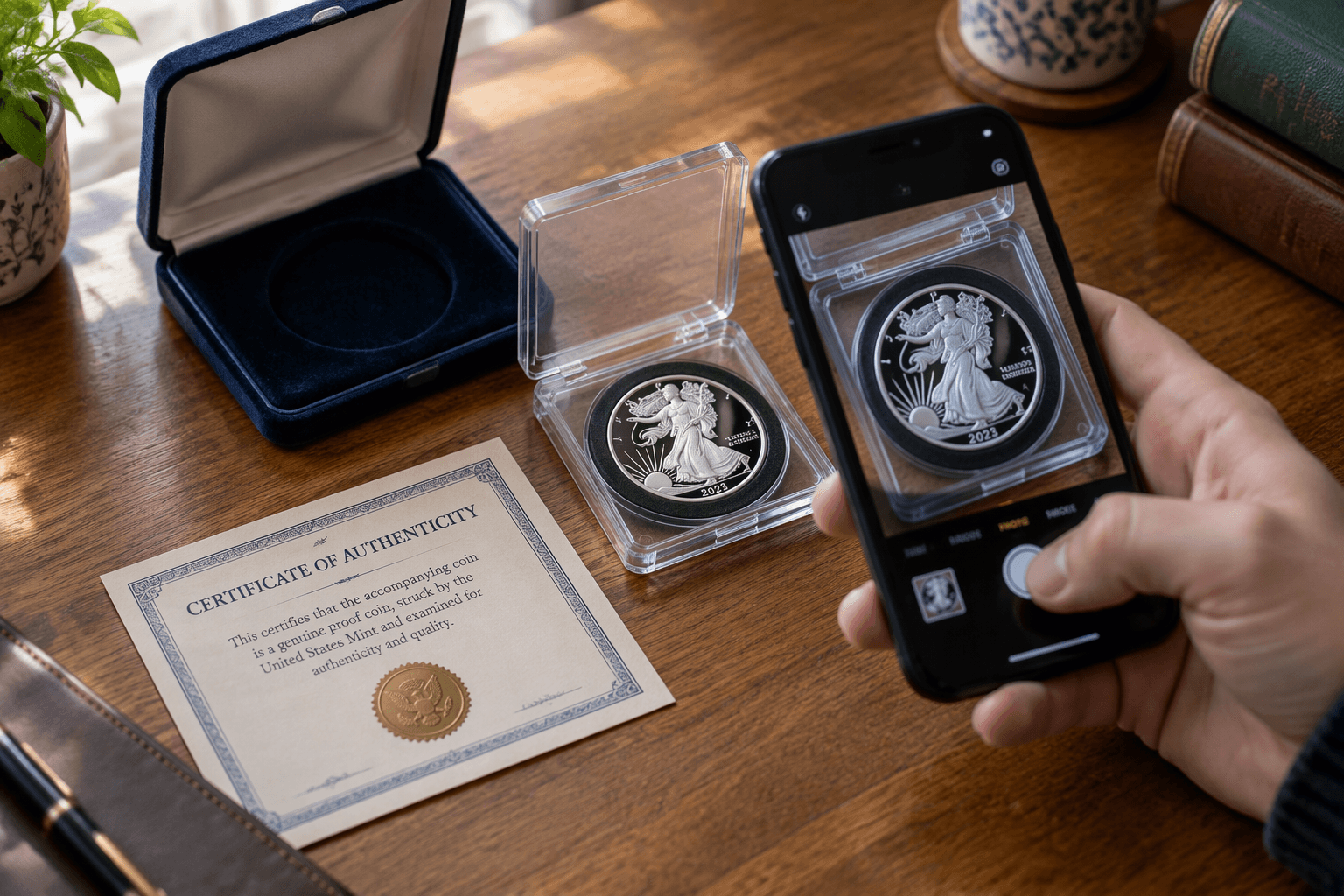
Then record what you found. A useful proof entry keeps the strike type ("proof", "reverse proof", or "uncirculated"), the packaging and certificate as photos or notes, and clear reference images of both sides. If you catalog in Folidx, photograph the coin in its case along with the certificate, and keep the strike type in the item's notes or description next to the original photos, so the process label travels with the evidence instead of living only in the box.
FAQ
Are proof coins worth more?
Not automatically. Proofs usually cost more at issue, because mints price the collector process higher than circulation coins. On the secondary market, value depends on the year, the mint and mintage, the condition grade, whether the original packaging and certificate survive, and current demand. Some common-date proofs sell for modest amounts, while scarce issues can trade far higher. Treat "proof" as one input in a value check, not a verdict: identify the coin, grade the condition, then compare sourced reference prices the way the guide to checking what your coins are worth describes.
Sources
- Wikipedia, Proof coinage: history of proofs, polished dies, multiple strikes, mirror fields and frosted relief, PR-70 grading context.
- Merriam-Webster, proof coin: dictionary definition.
- NGC (Numismatic Guaranty Company), What are Proof Coins Anyway?: business strike vs proof, mirror surfaces, and the complexity of early proofs.
- United States Mint, Proof Sets: annual proof sets sold directly to collectors.
About the author: Nina@Aurcue writes collector workflow guides for Folidx. This article describes public minting and grading conventions using the sources above; it does not offer grading, appraisal, authentication, or investment advice.