Coin Collection Storage: Protect, Label, and Find Every Coin
Compare coin flips, capsules, albums, and boxes, avoid PVC and handling damage, and keep every coin easy to locate with a private storage record.
AI-generated editorial illustration. A coin is placed into an inert protective capsule beside organized storage trays. · Source: GPT Image 2.5 · article-specific editorial illustration
Coin Collection Storage: Protect, Label, and Find Every Coin
Good coin collection storage does two jobs. It keeps each coin in a chemically stable holder in a cool, dry, steady environment, and it gives that holder a location you can find without opening every album or box.
Treat preservation and cataloging as separate decisions. The holder protects the coin. The label and private record tell you what it is, where it came from, and where it lives. A costly capsule with no location record is still easy to lose. A perfect catalog cannot protect a coin sitting in soft vinyl.
A safe storage plan in six steps
- Identify the coin material as far as the evidence allows, then inspect its current holder.
- Leave original Mint packaging and sealed certified holders intact unless a specialist gives you a reason to open them.
- Move raw coins out of known PVC holders and into holders whose material is clearly stated.
- Handle coins by the edges over a clean, padded surface. Do not polish them.
- Label the holder or its outside insert, never the coin.
- Record the same Archive Book and Archive Page names in your catalog and on the physical container.
The U.S. Mint's collection care guide lists cardboard and plastic holders, tubes, capsules, sleeves, envelopes, and albums as common options. It also warns collectors to use acid-free cardboard and PVC-free plastic. The right choice depends on the coin, how often you handle it, and whether you want to view a set together.
Identify the coin material and current holder
Start with what you know, not what the coin seems to be from a photo. Record the stated composition from Mint packaging, a reliable catalog, or an existing certified label. If the composition is uncertain, write "material unconfirmed" and research it later. A copper-colored surface does not prove a coin is solid copper, and a silver-colored surface does not prove silver content.
Then inspect the holder without rubbing or cleaning the coin:
- Is the coin in original Mint packaging, a sealed certified holder, a hard capsule, a cardboard 2 by 2, a clear flip, an album, a tube, or loose?
- Does the holder name its plastic, such as polyethylene, polypropylene, or polyester?
- Is the plastic very soft or flexible, with no material statement?
- Do you see green or oily residue, haze, spots, powdery corrosion, or moisture inside the holder?
- Can the coin move enough to rub against another coin or a hard edge?
The Canadian Conservation Institute's coin care note recommends individual protective holders made from stable, archival-quality plastics and specifically warns against PVC flips. It names polyethylene, polypropylene, polyester, polystyrene, and acrylic among suitable holder materials. A marketing word such as "collector safe" is less useful than a clear material statement.
If a raw coin is in a confirmed PVC holder, plan to rehouse it. If the coin is in sealed original packaging, has visible residue, or may be historically important, pause before opening anything. The package and label may be part of its provenance, and visible contamination may need professional attention.
Avoid common handling and storage mistakes
Do not touch the faces
Hold a coin by its edge over a soft, clean surface. The U.S. Mint and the Canadian Conservation Institute both recommend edge handling and clean gloves to keep skin oils off the surface. For silver coins, the Canadian guidance specifies clean cotton rather than latex because sulfur compounds in latex can tarnish silver.
Gloves do not make careless handling safe. A poorly fitting glove can make a coin easier to drop, so work slowly and keep the coin close to the padded surface.
Do not polish or experiment with cleaning
Polishing and amateur cleaning can scratch a coin, strip its surface, or leave residues. The U.S. Mint warns that polishing or cleaning can reduce value, while NGC Conservation notes that scratches and other damage from improper cleaning cannot be reversed by conservation.
If a coin has sticky green residue, haze, encrustation, or active corrosion, do not turn it into a home chemistry project. Isolate the affected holder from the rest of the collection and ask a qualified numismatic conservator what to do next.
Do not assume every clear plastic is safe
PVC can release plasticizer that damages coin surfaces. The Canadian Conservation Institute links PVC flips with green corrosion on copper alloys and some silver coins. The U.S. Mint gives the same practical warning: choose PVC-free holders.
Unknown soft plastic is a reason to investigate, not proof of PVC. Replace it with a clearly identified holder when you can do so without risking the coin or losing important packaging.
Avoid damp, hot, or rapidly changing locations
Keep the collection away from windows, exterior doors, vents, heating units, and places where condensation is likely. The Canadian Conservation Institute's guidance for metal storage explains that higher relative humidity increases corrosion risk and that stable storage areas should avoid sudden environmental changes and corrosive vapors.
Canadian Conservation Institute guidance says silica gel used in closed storage must be checked and reconditioned regularly. A humidity indicator card or small hygrometer can help you decide when the storage environment needs attention.
Do not let loose coins rub together
Tubes can be practical for quantities of similar, lower-priority coins, but the American Numismatic Association's storage overview notes that coins in a tube can rub against one another and are slower to identify. If surface contact matters, use individual holders.
Compare flips, capsules, albums, and boxes
No single container is best for every coin. Choose the primary holder first, then choose an album or box that keeps those holders orderly.
| Storage type | Best fit | Protection and access | Main caution | Findability |
|---|---|---|---|---|
| Archival flip | A growing collection that needs low-cost individual holders and room for notes | Lets you inspect both sides without touching the coin; a separate pocket can hold catalog information | Confirm the plastic is PVC-free and archival quality | Easy to label and sort, but loose flips still need a named book or box |
| Hard capsule | A coin that will be handled or viewed individually | Rigid protection with clear viewing on both sides | Use the correct diameter or insert so the coin does not move; the capsule still needs an outside label | Good when capsules are filed in a labeled tray or box |
| Coin album | A date, denomination, country, or theme set that you browse together | Keeps a sequence visible and reduces loose handling | Confirm every page, slide, and insert material; older or unmarked plastic deserves inspection | Excellent for browsing a set if page names match the catalog |
| Storage box | Secondary storage for labeled flips, capsules, or certified holders | Adds order, dust protection, and easier transport | A box does not replace an individual holder; avoid untested foam, wood, adhesives, and soft plastic near coins | Strong when the box maps to one Archive Book and its dividers map to Archive Pages |
This comparison separates direct coin protection from collection organization. A box is usually the outer layer. A flip or capsule is the inner layer. An album can do both jobs when its materials are known and the coin fits securely.
The Canadian Conservation Institute recommends closed cabinets or containers made from stable materials and warns that wood and some paints can release corrosive vapors. The goal is not to buy the most expensive case. It is to know what touches the coin and to keep the environment steady.
Label locations without marking the coin
Never write, stamp, tape, or place an adhesive label on a coin. Put the identifier on the holder's paper insert, on an outside label, or in the second pocket of an archival flip. Keep ink, adhesive, staples, and paper edges away from the coin compartment.
Use a location code that mirrors the two levels you already browse. For example:
Book C02 / Page 07
That code can appear in three places:
- On the album, tray, or storage box that represents
Book C02. - On the page or divider that represents
Page 07. - In the coin's private catalog record.
Do not create a location code that only its inventor can decode. If the physical label says World Silver / Page 7, use the same words in the catalog. When a coin moves, update the physical label and digital record in the same session.
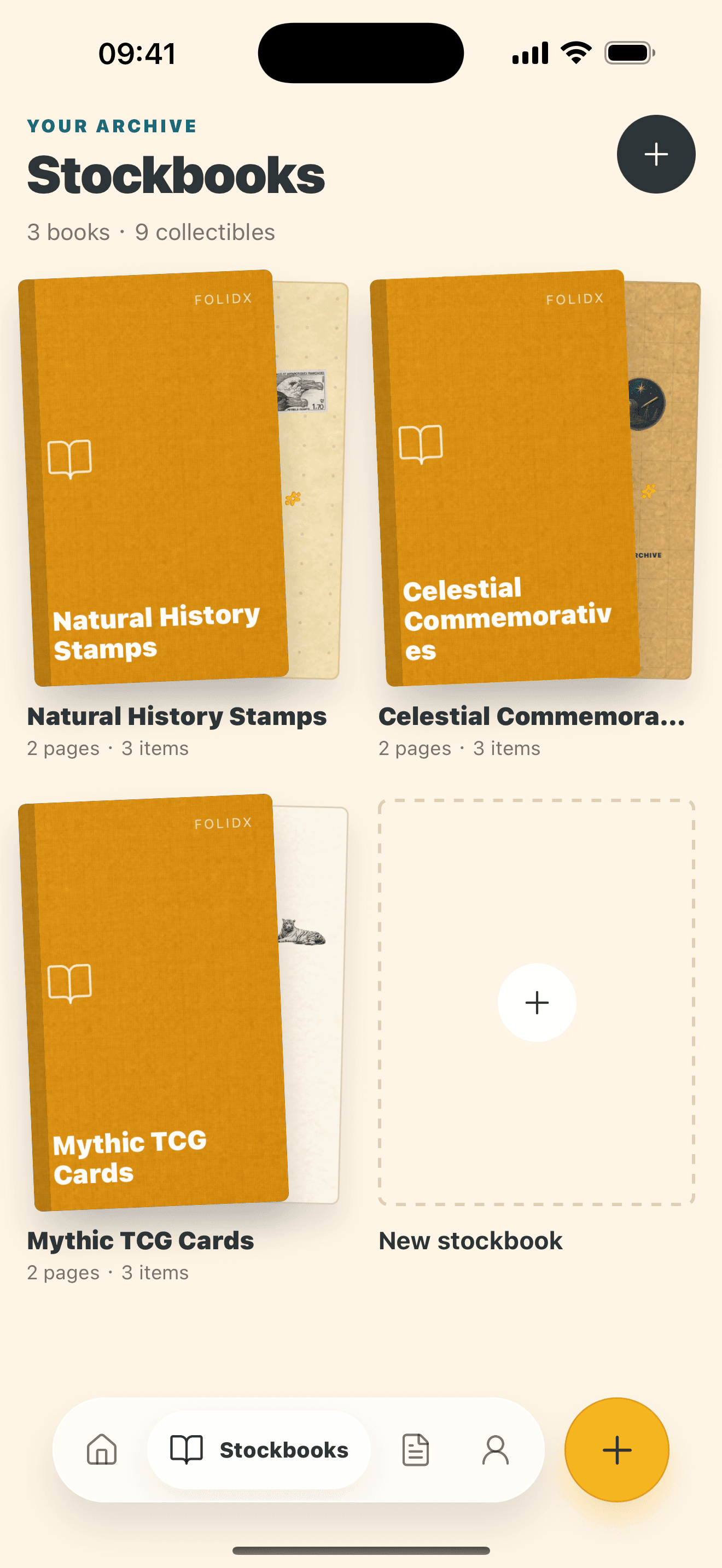
A 2026-07-20 Folidx App Store capture showing the Archive Book layer used for catalog organization. It does not represent a preservation assessment.
The separate Folidx guide to organizing a coin collection covers the broader archive structure. For storage, the useful rule is simpler: one physical holder, one catalog record, and one matching Archive Book and Archive Page location.
Record provenance and storage location
A storage record should help you identify the coin without repeatedly removing it from its holder. Start with these fields:
| Field | What to record |
|---|---|
| Identity | Country or issuing authority, denomination, year, mint mark if verified, and catalog reference if used |
| Material | Verified composition and source, or "unconfirmed" |
| Provenance | Where and when you acquired it, prior owner if relevant, and supporting documents |
| Current holder | Holder type, stated material, and the date you rehoused it |
| Condition snapshot | Clear photos of both sides and plain notes about visible marks, toning, residue, or corrosion |
| Location | Archive Book and Archive Page, written exactly as they appear on the physical storage |
| Documents | Original packaging, certificate, invoice, prior label, or specialist report |
Save the old label or packaging record when you rehouse a coin. Photograph it before separating it from the new holder. The U.S. Mint advises collectors to retain certificates and information cards that came with coins or sets, and the Royal Canadian Mint recommends keeping a catalog with purchase, value, storage, and handling details.
Photos also give you a dated condition reference. Use the same lighting and orientation when you check the coin later. A photograph cannot authenticate a coin or diagnose every form of corrosion, but it can help you notice a visible change and show a specialist what prompted the question.
Where Folidx fits
Folidx's coin collection workflow is for the cataloging side of this system. It can turn a coin photo into an editable reference record, keep source and condition notes, and file the item into an Archive Book and Archive Page so you can search your private archive later. Folidx is not an appraiser, authenticator, grading service, or preservation authority. Holder choice and conservation decisions still belong to the collector and qualified specialists.
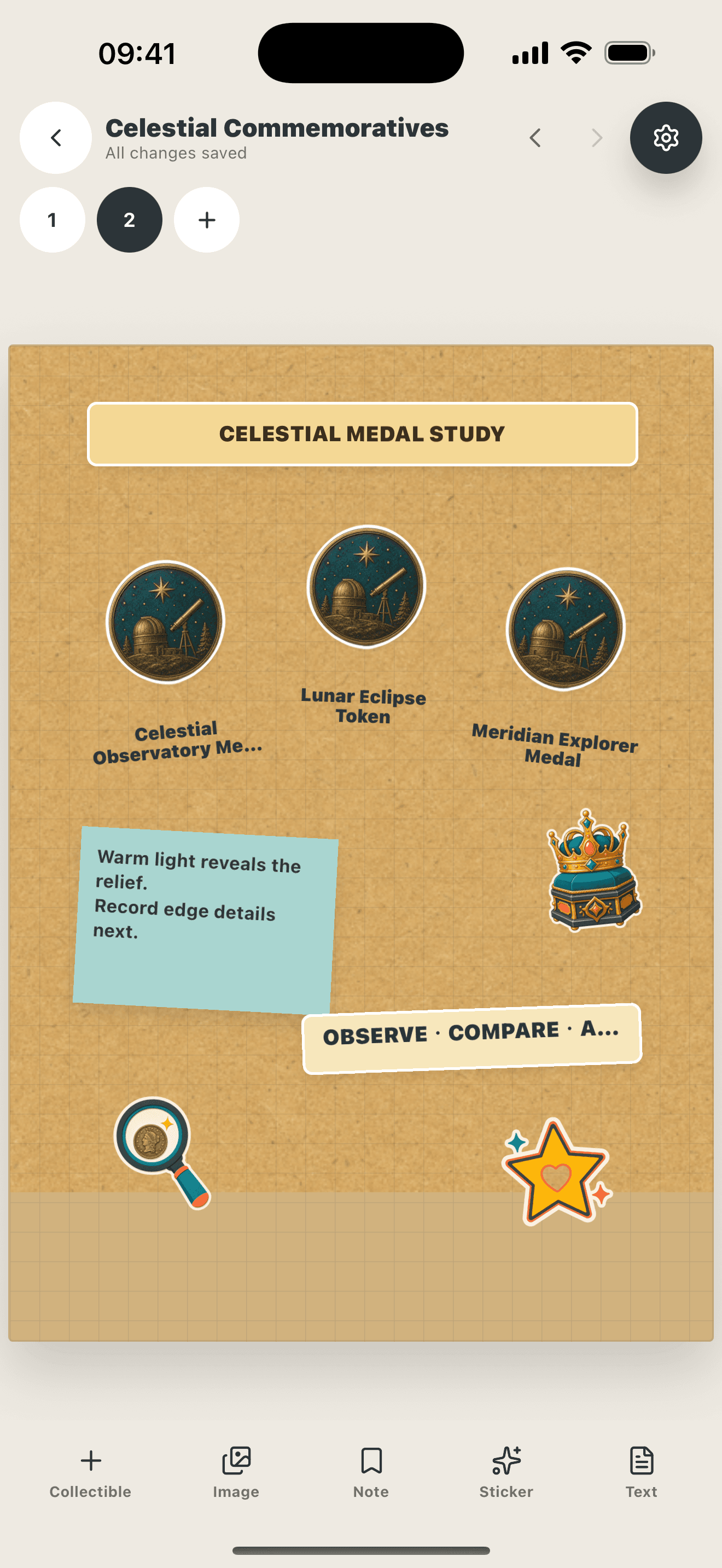
A 2026-07-20 Folidx App Store capture showing an Archive Page with editable coin records. The sample screen demonstrates catalog placement, not coin authentication, grading, or conservation advice.
If your coins are already in safe holders but the location list lives in a notebook, a spreadsheet, and your memory, start with ten coins. Match each physical Book and Page label to its Folidx record, then test whether you can find all ten without opening unrelated containers.
When to ask a conservator or specialist
Stop handling the coin and seek specialist advice when you see:
- sticky green film, oily haze, or residue associated with an old soft plastic holder;
- powdery, flaking, or spreading corrosion;
- encrustation that tempts you to scrape the surface;
- moisture trapped inside a sealed holder;
- a coin stuck to its holder or packaging;
- damage after fire, flooding, salt exposure, or chemical exposure;
- historically important packaging that may be lost by opening it;
- a coin whose possible value makes an irreversible mistake unacceptable.
NGC identifies PVC residue, haze, encrustations, verdigris, corrosion, and some other contaminants as conditions that may benefit from professional conservation. It also states that conservation does not provide a grade guarantee. Conservation, authentication, grading, and appraisal are different services, so choose the specialist for the actual question you need answered.
If the main problem is insurance, estate work, a suspected rarity, or authenticity, contact an appropriate appraiser, numismatist, or grading service. A storage article and a photo catalog cannot settle those questions.
Frequently Asked Questions
What is the best way to store a coin collection?
Keep coins in appropriate original Mint packaging and sealed certified holders unless a specialist advises otherwise. Store raw coins outside that packaging in individual, PVC-free holders whose material is clearly stated. Keep the holders in a cool, dry, steady environment, then label the outer storage and record the same Archive Book and Archive Page in a catalog. Valuable, contaminated, or historically important coins may need specialist advice.
Are coin capsules better than flips?
Capsules are more rigid and useful for coins you handle or display individually. Archival flips cost less, use less space, and give you room for a separate information insert. Both can work when the material is stable and the coin fits without rubbing.
Is it safe to store coins in plastic?
Some plastics are suitable and others are not. The Canadian Conservation Institute lists polyethylene, polypropylene, polyester, polystyrene, and acrylic among stable options and warns against PVC flips. Buy holders that state their material instead of relying on softness, smell, or a generic "safe" label.
How do I keep coins from tarnishing in storage?
Reduce unnecessary handling, use stable holders, keep the environment cool and dry, avoid rapid humidity and temperature changes, and check the collection periodically. Tarnish and corrosion depend on the metal and environment, so do not apply a coating or cleaning method without specialist advice.
Should I store my collection in a safe?
An appropriately secured, fire-rated safe can reduce some theft and fire exposure, as discussed in the American Numismatic Association's storage overview, but a safe does not automatically control humidity or prevent harmful materials from contacting the coins. Keep coins in appropriate holders inside the safe and monitor the environment. The U.S. Mint also recommends checking whether home insurance covers the collection; ask your insurer what documentation and coverage apply.
Sources
- Basic Care of Coins, Medals and Medallic Art, Canadian Conservation Institute, checked 2026-08-21.
- Storage of Metals, Canadian Conservation Institute, checked 2026-08-21.
- Caring for Your Coin Collection, United States Mint, checked 2026-08-21.
- How to Store Your Coin Collection, American Numismatic Association, checked 2026-08-21.
- What's the Best Way to Store Your Coins?, Royal Canadian Mint, checked 2026-08-21.
- Coin Conservation, NGC, checked 2026-08-21.
- Folidx product overview, checked 2026-08-21.
<!-- Editorial evidence for DRAFT_ONLY handoff:
- Task: ffcea586-6db2-4e53-89c8-5a2d231bfce9; Product: folidx; Content ID: PAGE-032.
- Frozen outline checksum of the repository copy: fff2b313b791517efa45c1c85b54d62fea765448875550587842193cc667233d.
- Demand evidence supplied by the frozen outline: Semrush US Volume 320, KD 20, CPC 0.39, collected 2026-08-11.
- Search refresh: 2026-08-21 10:51 CST. US English results reviewed for holder comparisons, conservation guidance, and question patterns. Exact Google desktop PAA could not be independently captured, so it must be rechecked before publication.
- Existing-content inventory: live Folidx Blog showed two articles on 2026-08-21. The closest match is /blog/how-to-organize-a-coin-collection, which covers catalog structure and duplicate checking. PAGE-032 has a different dominant job: selecting chemically safe storage while preserving findability.
- Visual: the article-specific holder comparison table is original. A fresh Chrome capture timed out, so two existing, non-substitutable real Folidx App Store captures dated 2026-07-20 were reused instead of drawing or generating UI.
- Asset 1 provenance: docs/aso/appstore/screenshots/raw/20260720/en-US/03-stockbooks.png; copied to assets/folidx-archive-books.png; 1320 by 2868; 2,291,605 bytes before compression and 1,731,175 after; alt text records the visible Archive Book list.
- Asset 2 provenance: docs/aso/appstore/screenshots/raw/20260720/en-US/05-coin-canvas.png; copied to assets/folidx-archive-page.png; 1320 by 2868; 2,939,777 bytes before compression and 2,284,421 after; alt text records the visible Archive Page.
- Publication state: draft file only. No CMS write, publication, deployment, or distribution performed. -->