What Is a First Edition Pokemon Card? The Stamp, the Print Runs, and How to Check Yours
What the 1st Edition stamp means, how 1st Edition, Shadowless, and Unlimited print runs differ, and a four-step check to record your card.
A first edition Pokemon card is a card from the very first commercial print run of its set. Wizards of the Coast, the original English publisher of the Pokemon Trading Card Game, marked those early cards with a small black circular stamp: a "1" inside a circle, with the word EDITION curving beside it. If your card carries that stamp, it came from the limited first printing. If it does not, it came from a later run, which is not automatically bad news but does change what the card is.
This guide covers three things: where the stamp sits on the card, how 1st Edition, Shadowless, and Unlimited print runs relate to each other in the 1999 English Base Set, and a four-step check you can run on any card in your binder. No price talk here. Recognizing a print run and valuing a card are different jobs, and this article stays on the first one.
What "first edition" actually means
When a trading card set launches, the publisher prints a first batch, sells it, and then prints more batches to meet demand. The first batch is the first edition. In the Pokemon TCG's early years, Wizards of the Coast officially called this the Limited Edition run and stamped every card from it with the Edition 1 mark (Kanto Shark).
Two consequences follow from that system:
- First edition cards exist in smaller quantities. The initial run was capped and often sold out before demand peaked, so fewer stamped copies circulated than unstamped ones.
- The stamp is a print-run marker, not a quality marker. It says nothing about condition, authenticity, or value on its own.
Later runs are called Unlimited editions. They carry the same card designs but no Edition 1 stamp.
The 1st Edition stamp and exactly where to look
The stamp is easier to find once you know its address. On Wizards-era English cards, the Edition 1 symbol sits on the left side of the card, just below the artwork box (Relentless Dragon). It is a solid black circle with a white numeral 1 and the word EDITION printed beside it in small letters.
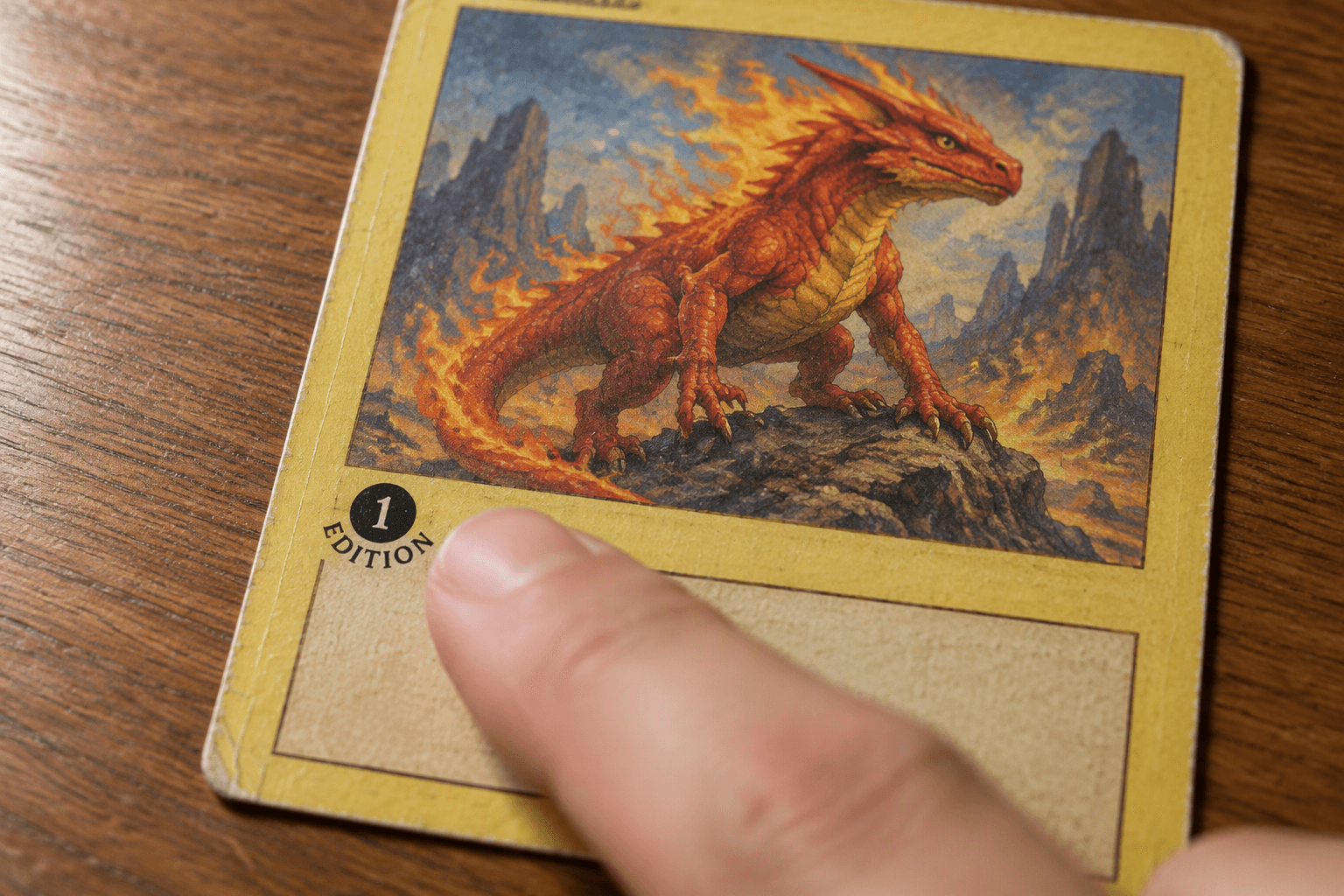
A ten-second routine:
- Hold the card face up under decent light.
- Find the artwork window at the top of the card.
- Move your eyes to the strip directly below that window, on the left side, next to the type icon.
- Look for the black circle with the 1. Old sleeves and wear can obscure it, so tilt the card if the area looks blank at first glance.
If the circle is there, you have a first edition card. If it is not, keep checking, because absence of the stamp still leaves two print-run possibilities in the Base Set, which brings us to the word that confuses beginners most: shadowless.
What does shadowless mean? The 1st Edition vs Shadowless vs Unlimited ladder
"Shadowless" describes the artwork frame, not the stamp. On most Pokemon cards, a gray drop shadow runs behind the right and bottom edges of the artwork window, giving the frame a little depth. The earliest Base Set printings skipped that shadow entirely, so the artwork sits flat against the yellow border. That is what "shadowless" refers to.
The 1999 English Base Set came out in three print-run rungs (Kanto Shark; Relentless Dragon):
| Print run | Edition 1 stamp | Artwork frame shadow | What it is |
|---|---|---|---|
| 1st Edition | Yes | None | The limited first printing, officially the Limited Edition run |
| Shadowless | No | None | A second limited printing: the stamp was dropped, the shadowless design stayed |
| Unlimited | No | Yes | The mass reprint that added the drop shadow, bold HP type, and brighter colors |
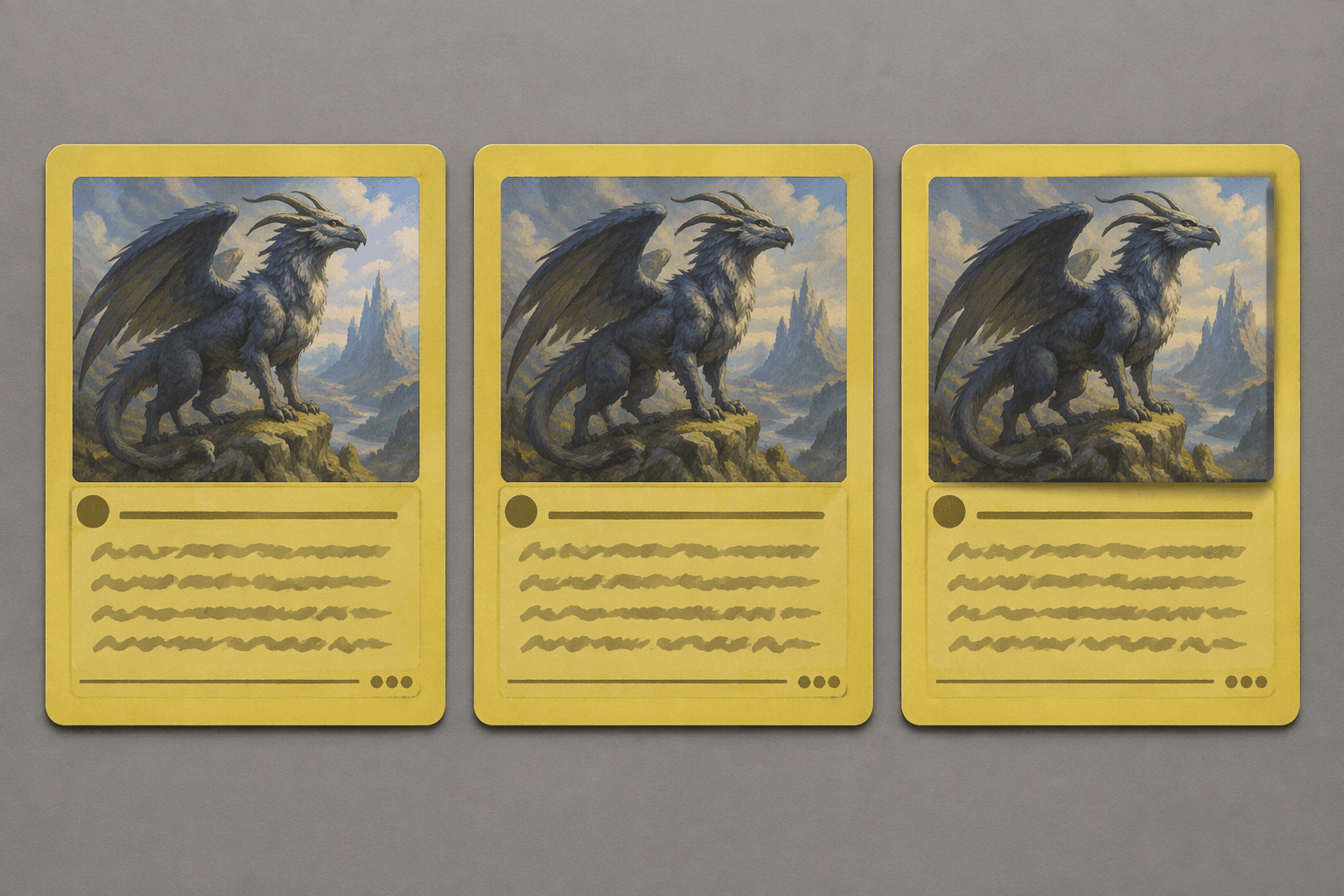
Every 1st Edition Base Set card is also shadowless, but not every shadowless card is 1st Edition. That asymmetry is why the two checks belong together: the stamp answers "which printing," and the frame answers "which design era."
Two further tells help you sort shadowless from Unlimited, and they matter most on trainer cards, which never carried the artwork shadow in any run (Relentless Dragon):
- HP typeface. Unlimited cards set the HP value in a bold typeface; shadowless cards use a thinner font.
- Copyright line. The shadowless second printing reads "© 1995, 96, 98, 99 Nintendo, Creatures, GAMEFREAK. © 1999 Wizards." at the bottom of the card, while Unlimited print runs drop the '99 year from that line.
Do modern sets have first edition stamps?
No, not in English. Distinct 1st Edition print runs ran throughout the Wizards of the Coast era, and the last English set to receive one was Neo Destiny in 2002 (PSA Set Registry). After that, Wizards scrapped separate first printings, and no English expansion since has carried the Edition 1 stamp (Kanto Shark).
One exception inside that era is worth knowing: Base Set 2, the 2000 reprint set that combined cards from Base Set and Jungle, never had a 1st Edition configuration (Relentless Dragon).
Practical takeaway: if your card is from Expedition Base Set (2001) onward or any modern Sword and Shield or Scarlet and Violet expansion, a "1st Edition" mark is either a misread of some other symbol or a sign of an altered card. For example, Base Set 2 and Legendary Collection reprints reuse the famous Base Set Charizard artwork, and neither was ever stamped, yet both are classic look-alike traps. Prerelease and event stamps exist on some promos, but none of them is the Edition 1 circle.
How to check your card in four steps
Here is the full check, in the order that saves the most time:
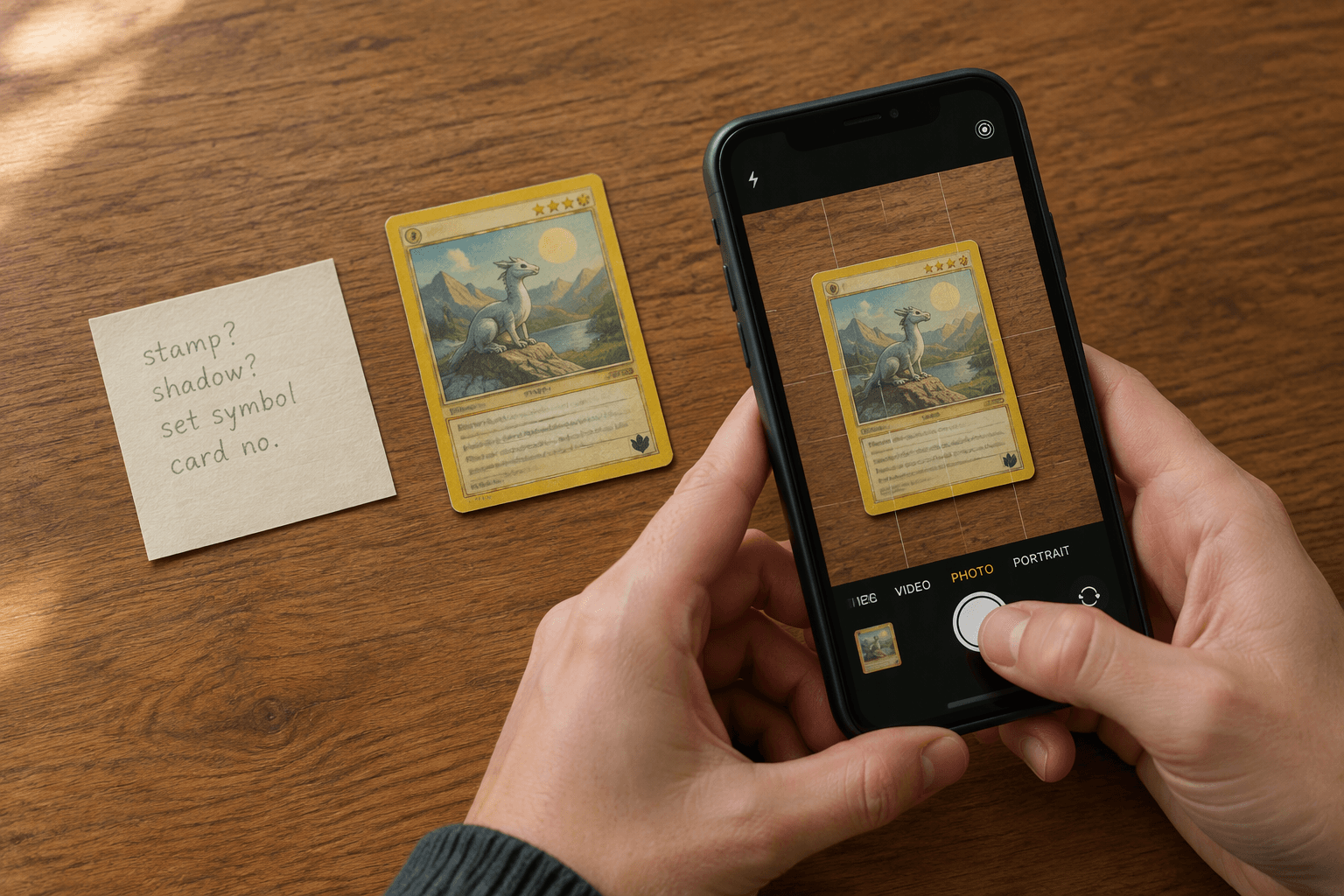
- Look for the stamp. Left side of the card, just below the artwork box. Present means 1st Edition; absent means keep going.
- Check the frame shadow. Is there a gray drop shadow behind the artwork window? No shadow plus a stamp is the 1st Edition Base Set look. No shadow without a stamp points to Shadowless. A shadow means Unlimited.
- Read the set symbol and card number. The set symbol at the bottom right and the collector number (such as 4/102) tell you which set you are actually holding. This step catches Base Set 2 and other reprints that reuse older artwork.
- Photograph the card cleanly. A straight-on shot in good light captures the stamp, the frame edge, and the set symbol in one image. Our guide to scanning Pokemon cards covers the setup.
Record it: what to write down before you research anything else
Whatever the four steps show, capture the observations before opinions creep in:
- Stamp: present or absent, and its condition.
- Frame shadow: yes or no behind the artwork window.
- Set symbol and card number.
- The card's visible condition cues: corners, edges, surface.
A written record keeps the print-run facts separate from any value questions that come later, and it gives whoever you ask next, whether a community group or a grading service, something concrete to look at. Folidx is one option for keeping those photos and observations together as an editable private archive, but any consistent note-taking method works. The habit matters more than the tool.
One boundary worth stating plainly: recognizing a print run is not authentication. Counterfeit cards sometimes imitate the Edition 1 stamp, so anything you believe is valuable should be verified by a professional grading service. Folidx does not grade or authenticate cards; it records what you observe and where you saw it. If you are weighing whether to send a card in for grading, our card grading 101 guide explains what PSA and CGC reports mean, and our Pokemon rarity symbols guide covers the other mark family on your cards, the set-level rarity symbols in the bottom corner.
FAQ
What year did first edition Pokemon cards come out? The first English first edition cards shipped with Base Set in January 1999. The Edition 1 stamp continued on English sets through Neo Destiny in 2002, with Base Set 2 as the one exception.
Are first edition Pokemon cards worth more? As a general pattern, yes: first print runs were smaller, so stamped copies are scarcer than Unlimited copies of the same card. But scarcity is only one input. The specific card, its condition, and collector demand decide the rest, and a worn first edition common card is usually worth less than a pristine later printing of a popular card. See how to check Pokemon card values for a careful way to research that.
How much is a first edition Pokemon booster box worth? That question belongs to the market, not to print-run identification, and prices move constantly, so we do not quote figures here. If you want a number, research recent comparable sales from reputable sources, and have any high-value sealed product professionally verified before transacting.
Is a shadowless card the same as a 1st Edition card? No. On the 1999 English Base Set, every 1st Edition card is shadowless, but the second limited printing was shadowless without the stamp. Check both the stamp and the frame.
Do Japanese Pokemon cards have first edition stamps? Japanese sets used their own first edition markings during parts of the same era, with a different symbol and different end dates than English cards. The checks in this article apply to the Wizards of the Coast English runs from 1999 to 2002.
Sources
- Kanto Shark, 1st Edition Pokemon Cards Explained: A Beginner's Guide, stamp appearance and print-run definition.
- Relentless Dragon, Identifying Early Pokemon Cards, stamp location, shadowless vs Unlimited tells, copyright line, Base Set 2 reprint status.
- PSA Set Registry, Collecting the 2002 Pokemon Neo Destiny 1st Edition Set, last English set with the 1st Edition stamp.
- Folidx product boundary: Folidx provides collection management and reference information; it does not provide appraisal, professional grading, or authentication (docs/product-overview.md, section 2.2).