Coin Roll Hunting for Beginners: What to Pull and How to Record Finds
How coin roll hunting works, what to look for in each denomination, practical tips for your first bank visit, and how to log finds with sources.
Coin Roll Hunting for Beginners: What to Pull and How to Record Finds
Coin roll hunting is simple in principle: you trade paper money for sealed bank rolls of coins, open the rolls at home, and pull out anything worth a second look before returning the rest. Your money stays at face value, so the main cost is time. This guide covers what the hobby actually involves, how to handle your first bank visit, what to look for in each denomination, and how to record finds so their story survives past the kitchen table.
What Is Coin Roll Hunting?
Collectors abbreviate the hobby CRH. You exchange bills for wrapped rolls of pennies, nickels, dimes, quarters, or half dollars at face value, then search them at home for silver, older designs, low-mintage dates, and errors. Anything you do not keep goes back into circulation, usually as a deposit or another exchange. The practice is well documented on Wikipedia's coin roll hunting page, which traces how collectors use circulating coinage as a low-cost hunting ground.
The appeal is access. A roll of quarters costs $10 and holds 40 coins; a standard bank box holds 50 rolls. Many hunters start with a single box of half dollars. Set expectations before you begin: most rolls contain ordinary spendable coins, silver is uncommon, and no roll or box comes with a guarantee.
Your First Bank Visit
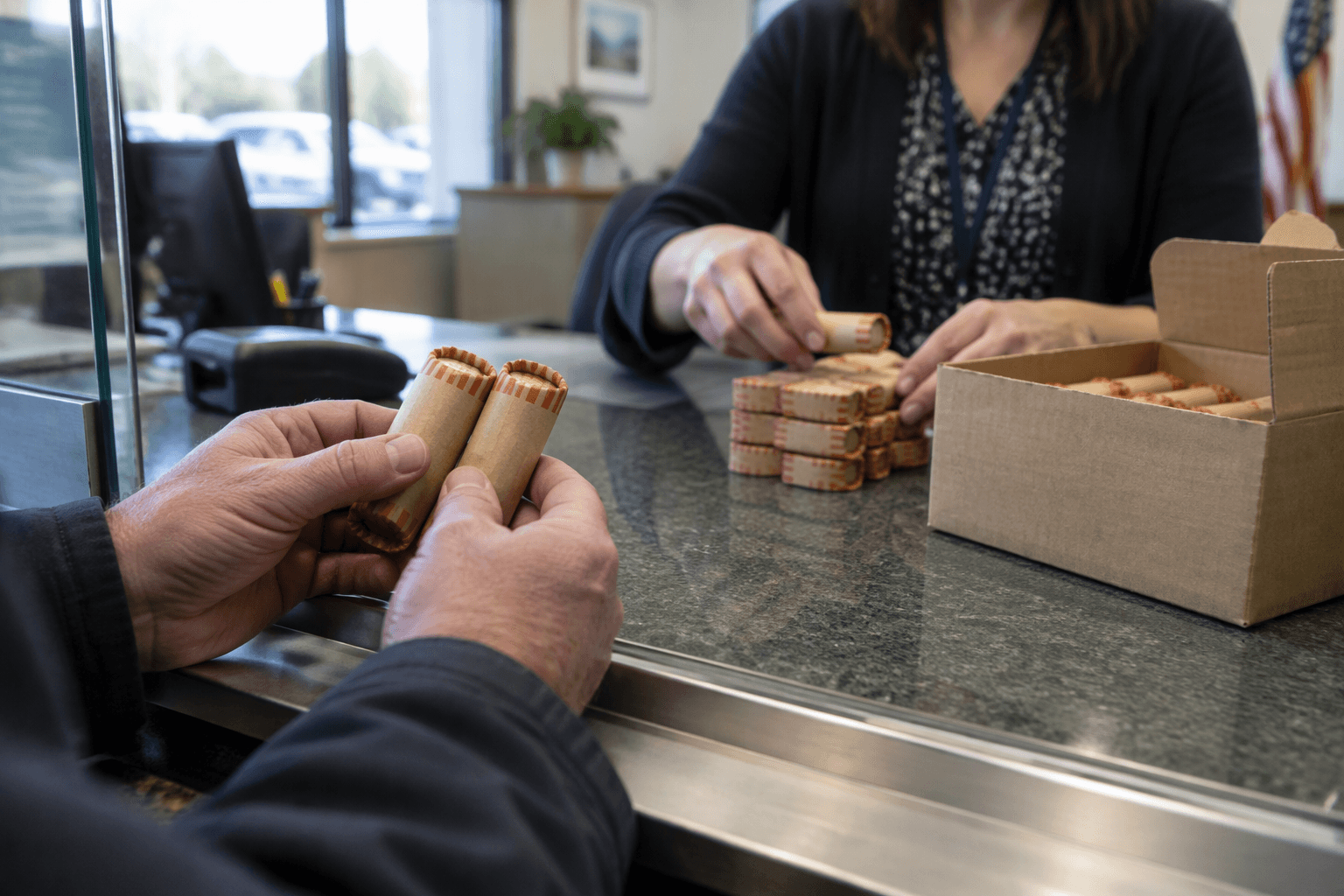
Ask the teller one clear question: "Do you have any rolls or boxes of half dollars?" Adjust the denomination to whatever you want to search. A few practical points for the first trip:
- Bring your account or ID. Some banks sell rolls only to account holders. Policies vary by bank and even by branch, so treat the teller's answer as the rule for that counter.
- Start small. One box of half dollars ($500) or a few rolls of quarters is enough for a first session.
- Ask what arrives most often. Some branches rarely see half dollars; others get them regularly.
- Keep the relationship friendly. Many hunters use two banks: a pickup bank where they buy rolls and a dump bank where they deposit searched coins. This is community practice rather than a published bank rule, and some banks restrict how they accept bulk coin, as described in a community guide to coin roll hunting. Confirm the coin policy at your own counter before you plan around it.
What to Pull, Denomination by Denomination
The fastest way to search is to know one or two target features per denomination before you open the wrapper.
| Denomination | Look for | How to spot it |
|---|---|---|
| Pennies | Wheat cents (1909 to 1958); pre-1982 copper cents | Wheat ears on the reverse; pre-1982 cents are solid copper and weigh about 3.11 g against about 2.50 g for modern zinc cents |
| Nickels | War nickels (1942 to 1945); Buffalo nickels (1913 to 1938) | War nickels contain 35% silver and carry a large mint mark above Monticello on the reverse |
| Dimes | Anything dated 1964 or earlier | 90% silver; the edge reads as one uniform silver-colored metal |
| Quarters | Anything dated 1964 or earlier | 90% silver; modern clad quarters show a copper-colored core line on the edge |
| Half dollars | 1964 and earlier (90% silver); 1965 to 1970 (40% silver) | The same edge test; half dollars offer the best odds of silver per box |
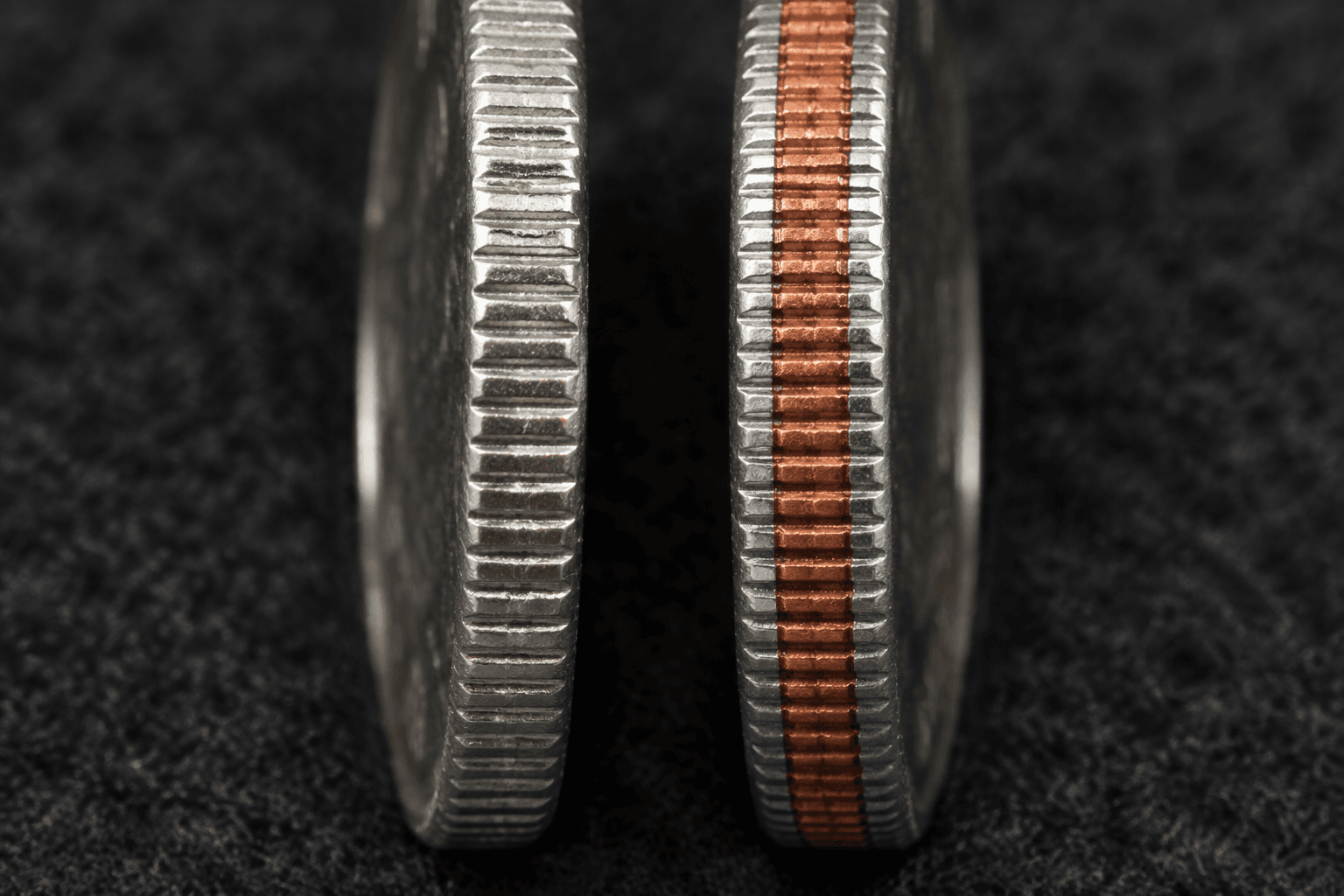
Illustration of the edge test: a pre-1965 silver edge reads as one solid metal color, while a modern clad quarter shows a copper-colored core line between silvery outer layers.
The edge test is the workhorse. Fan a handful of coins between your fingers and read the rims without flipping each coin; a solid silver-colored edge stands out against the copper stripe of clad coinage. Date and reverse design tell you the rest. These denomination targets match the summary maintained on Silver Recyclers' coin roll hunting guide.
Coin Roll Hunting Tips That Actually Help
- Sort by edge first. Edge screening cuts a box of quarters down to a short list in minutes and saves date-checking for the candidates.
- Keep a per-roll log. Note the bank, the date, the denomination, and what you found. Your own log is a better predictor of where coins circulate than forum anecdotes.
- Rotate denominations and branches. The same box recirculates if you return it to the same counter every week, so vary both the denomination you ask for and where you dump.
- Return coins the polite way. Deposit searched coins at your dump bank in labeled, orderly rolls rather than dumping loose coin on a teller.
- Expect mostly nothing. A typical session produces little beyond loose change. That is the baseline, not a failure, and it is why the habit of recording what you find matters more than any single score.
Is Coin Roll Hunting Worth It?
Answer it as a hobby question, not an income question. The money you exchange returns at face value, so the honest comparison is your time against your hit rate, not dollars against dollars. If you enjoy the search, the history in the dates, and the chance of an occasional silver coin, the hobby pays for itself in entertainment. If the goal is reliable income, the find rates do not support that framing, and this article makes no earning promise of any kind.
A practical way to decide: run three or four sessions, log rolls searched and finds per roll, and judge the ratio yourself. Hunters who keep the log stay in the hobby longer because they can see whether their own numbers justify the time.
What to Do With Your Finds
- Identify the coin. Confirm the date, mint mark, and visible condition before deciding whether to keep it. The step-by-step process is covered in Coin Identification: How to Name an Unknown Coin.
- Check the value carefully, if at all. Resist the urge to clean a find; washing an old coin can remove the surface detail that matters. See Should You Clean Old Coins? and, when you want a careful reference check, How Much Are My Coins Worth?.
- Record the source. Note which bank, which roll, and what date produced the coin. That provenance is exactly what gets lost, and it is the part that makes a find verifiable later. If you keep a coin, add its bank and roll date to its record in your Folidx archive so the source stays attached to the coin.
FAQ
How do you hunt coin rolls?
Exchange cash at a bank for rolls of the denomination you want to search, open the rolls at home, screen coins by edge color and date, keep anything of interest, and return the rest to circulation. Record each find with its bank and roll date so the coin's source is documented.
Sources
- Coin roll hunting, Wikipedia: definition and denomination-level silver targets.
- Coin Roll Hunting, Silver Recyclers: per-denomination look-for list.
- Coin Roll Hunting, Jesse Coins: pickup and dump bank practice as community experience, not bank policy.
Limits: bank roll and coin policies differ by institution and branch, so confirm at the counter. Roll searching offers no guarantee of finding silver or errors, and this article makes no investment, appraisal, or earnings claim.