How to Tell If a Coin Is Silver: Date, Edge, and Simple Home Tests
Check US coins for silver content by date and denomination, use the edge test safely, and record what you find with dated, editable notes.
How to Tell If a Coin Is Silver: Date, Edge, and Simple Home Tests
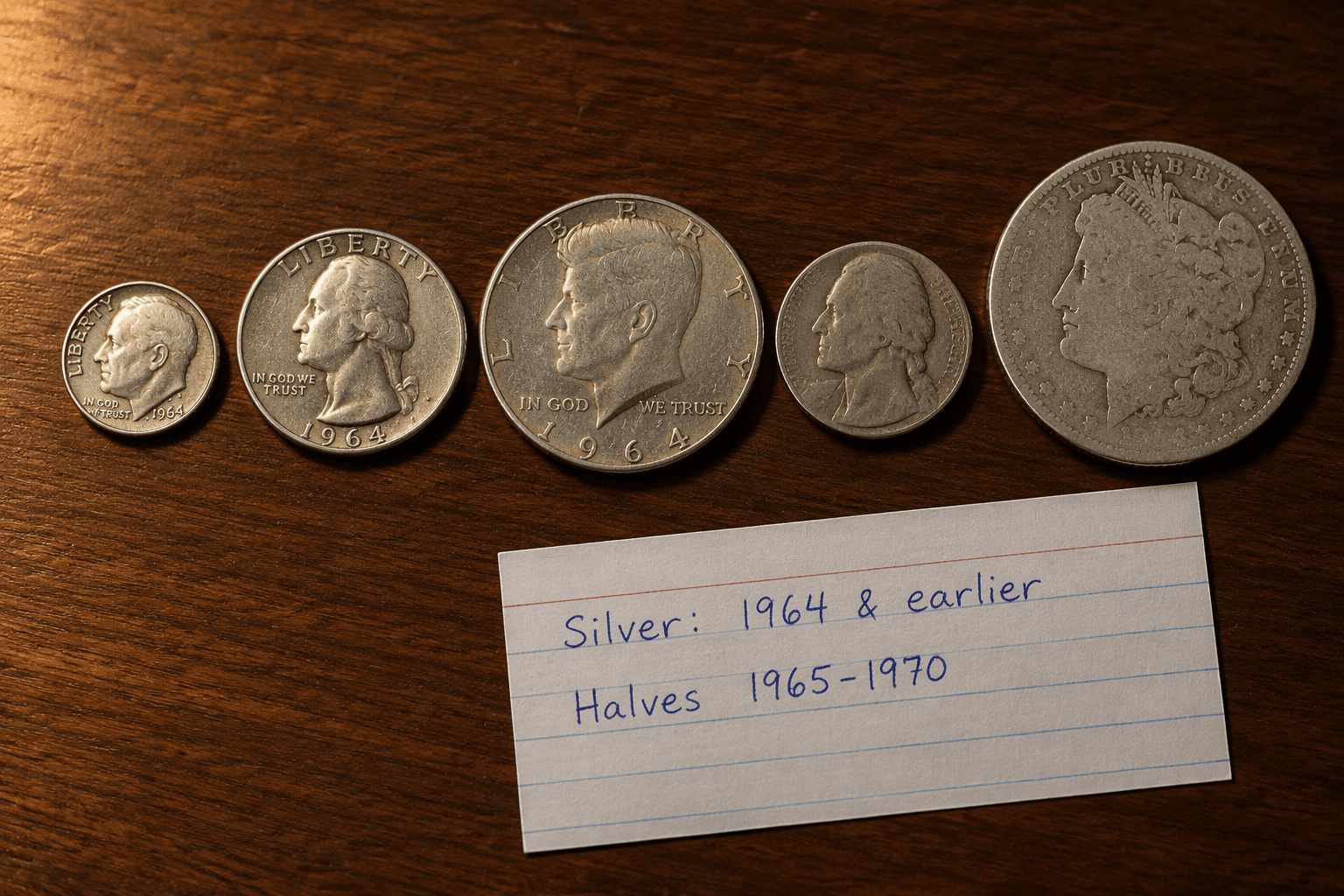
If you are sorting a jar of change or going through coins you inherited, the question behind almost every coin is the same: is my coin silver? The short answer comes from the date. For United States coins, dimes, quarters, half dollars, and dollar coins dated 1964 and earlier are 90 percent silver. Kennedy half dollars from 1965 to 1970 are 40 percent silver, and nickels from 1942 to 1945 with a large mint mark over Monticello are 35 percent silver. Almost everything else you will find in pocket change contains no silver at all.
This guide walks through the check in the order that actually works: date first, denomination second, then the edge, and only then the optional home tests. It ends with a simple way to record what you found before you research anything.
Start with the date: what coins are silver, by denomination
The fastest way to answer "what coins are silver" is a table. Check the denomination, then the date:
| Coin | Silver years | Silver content |
|---|---|---|
| Roosevelt dimes | 1946 to 1964 | 90% |
| Washington quarters | 1932 to 1964 | 90% |
| Half dollars (Walking Liberty, Franklin, Kennedy) | 1916 to 1964 | 90% |
| Kennedy half dollars | 1965 to 1970 | 40% |
| War nickels | 1942 to 1945, large mint mark | 35% |
| Morgan and Peace dollars | 1878 to 1935 | 90% |
| Everything else in circulation | none | 0% |
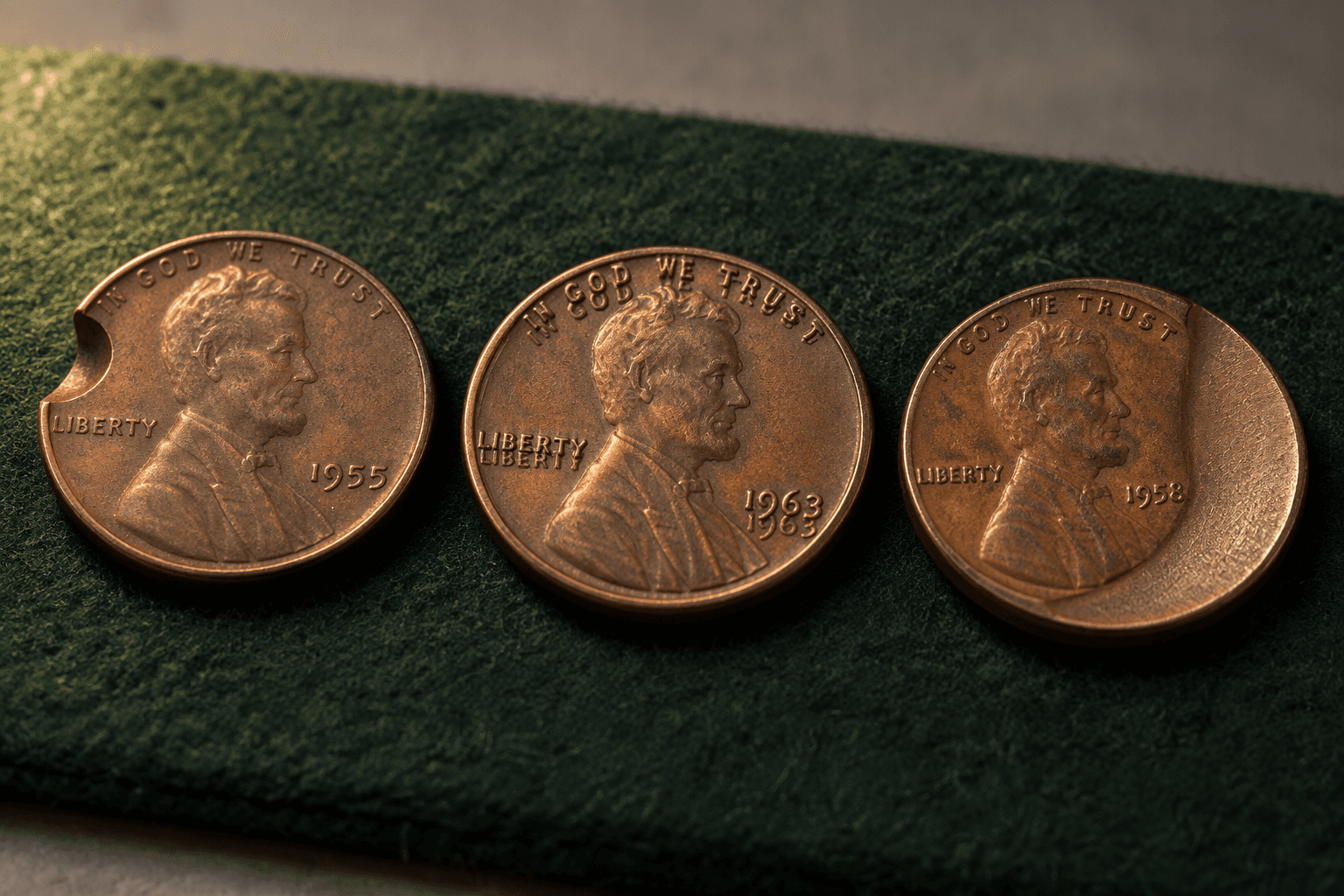
Two details trip people up here. First, not every pre-1965 coin is silver: cents and ordinary nickels were never struck in silver, so a 1958 penny is still copper and zinc. Second, a few modern coins do contain silver, but they were sold in collector proof sets and never released into circulation, so finding one in change is essentially not how the story goes. A proof finish and silver content are separate questions; see what a proof coin is if that distinction matters for your coin.
Why the 1965 quarter matters
The 1965 quarter is the hinge date for the whole check. Through 1964, quarters were struck in 90 percent silver. Under the Coinage Act of 1965, the Mint switched dimes and quarters to a copper-nickel clad sandwich because the silver in each coin was beginning to cost more than its face value, and it kept silver only in the half dollar at a reduced 40 percent level through 1970.
That is why collectors say "check the date first." A 1964 quarter is silver; a 1965 quarter is clad. Nothing else about the coin, such as its color or shine, replaces that one number. A tiny number of 1965 and later error strikes exist on leftover silver planchets, but those are a specialist topic for dealers, not something to count on when sorting change.
The edge test: what a silver rim looks like
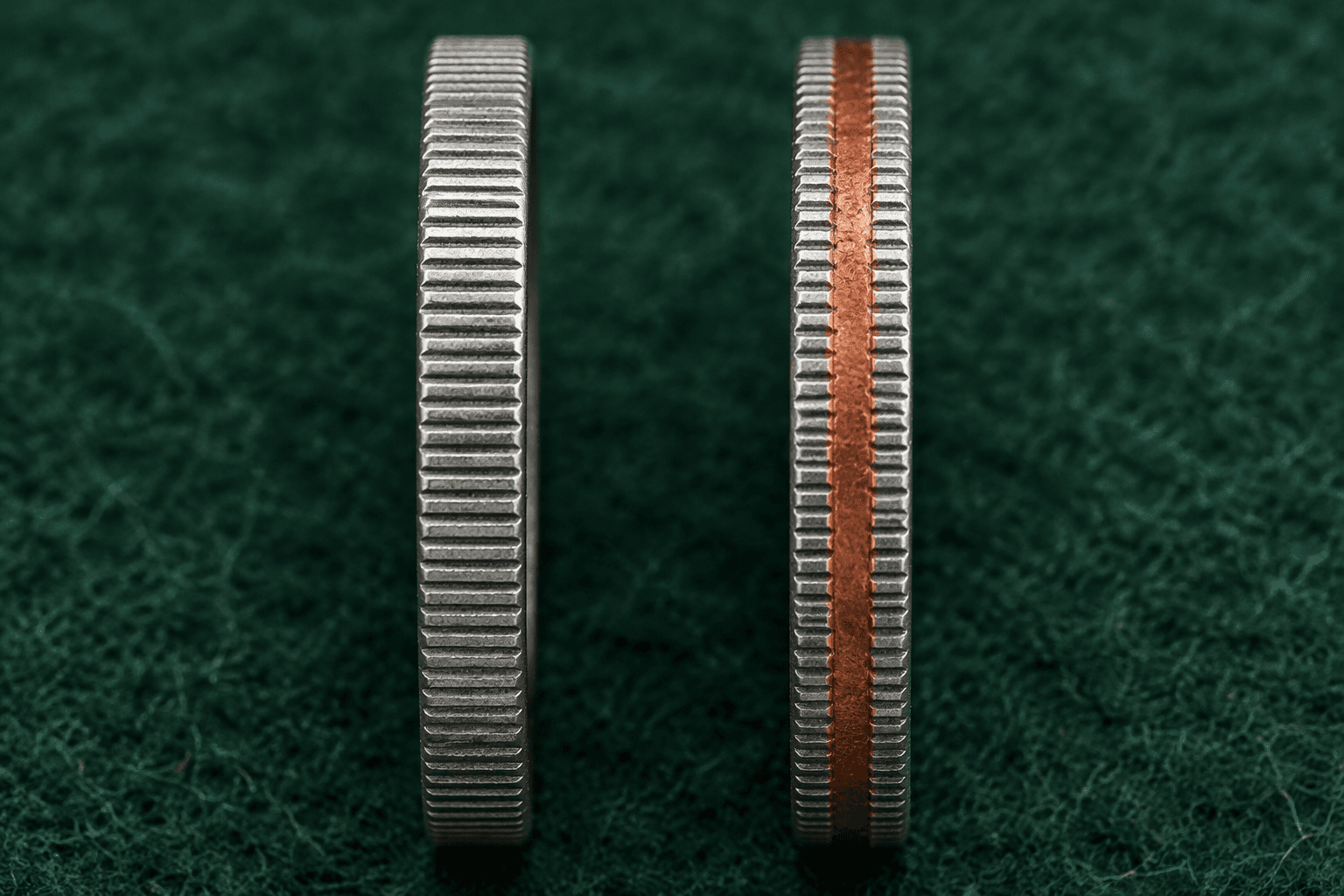
The edge test is the quickest physical check, and it works because of how clad coins are made. Modern clad quarters and dimes are a copper core with copper-nickel outer layers, so if you hold the coin edge up under a good light you will see a reddish copper stripe running around the rim. A solid silver coin is silver all the way through, so its edge shows one uniform silver-gray band from face to face.
Look for:
- Clad edge: a visible copper-colored stripe between two silvery outer layers.
- Silver edge: one continuous gray band, no stripe, with the same tone as the coin's faces.
Wear, dirt, and dark toning can mute the stripe, so wipe gently with a soft cloth and use bright light. If the edge is uncertain, the date rule still decides the common cases.
Magnet, ping, and weight: ordering the at-home tests
Once the date and edge point to silver, you can add optional checks. Order them by how much they actually tell you and how safe they are for the coin:
- Date and denomination. Free and definitive for the common cases in the table above.
- Edge test. A copper stripe means clad; a uniform gray rim supports silver.
- Magnet test. Silver is not magnetic, so a coin that sticks firmly to a magnet is not silver. Be careful with the logic in reverse: most clad coins are not magnetic either, so passing the magnet test does not confirm silver. Its real use is ruling out steel, for example fake "silver" coins struck on steel blanks.
- Weight. A small kitchen or jewelry scale settles the common cases quickly. A 90 percent silver quarter weighs 6.25 grams while a clad quarter weighs 5.67 grams. A silver dime weighs 2.50 grams against 2.27 grams for the clad version. Kennedy halves run 12.50 grams in 1964, 11.50 grams in the 1965 to 1970 40 percent years, and 11.34 grams in later clad years.
- Ping test. Flick the coin and listen. Silver rings with a longer, clearer tone than clad metal. It is subjective, works better on larger coins, and should be treated as a hint, not proof.
| Coin | Silver version | Clad version |
|---|---|---|
| Quarter | 6.25 g | 5.67 g |
| Dime | 2.50 g | 2.27 g |
| Half dollar | 12.50 g (1964) | 11.34 g (1971 and later) |
If you need certainty for a coin that might be valuable, a dealer or a grading service can verify composition without touching the surface.
What not to do: acid, vinegar, and scratch tests on collectible coins
Some testing kits and online tips suggest acid drops, vinegar soaks, or scratch tests. Skip them for collectible coins. Acid testers are designed for bullion bars and jewelry, and a drop can leave a permanent mark on the surface of a coin. A vinegar soak does not cleanly separate silver from clad, and soaking can alter or dull original surfaces, which matters to anyone who will look at the coin after you. Scratching or grinding an edge destroys the exact feature the edge test relies on.
If a coin might be worth more than face value, the safest move is to stop testing and photograph it. The same principle applies to cleaning; see should you clean old coins for why the answer is usually no.
War nickels and half dollars: the two exceptions people miss
Two groups sit outside the "1964 and earlier" rule, and both get mis-sorted constantly.
War nickels, 1942 to 1945. To save nickel for the war effort, the Mint struck five-cent coins from an alloy of 56 percent copper, 35 percent silver, and 9 percent manganese. You can identify them by the large mint mark letter, P, D, or S, placed above Monticello on the reverse. Nickels from those years without the large raised mint mark are ordinary copper-nickel and contain no silver. If you are unsure where to look, the mint mark guide for US coin mint marks shows the exact positions by denomination.
Half dollars. People assume either that all half dollars are silver or that none are. The truth is a three-step ladder: halves through 1964 are 90 percent silver, Kennedy halves from 1965 to 1970 are 40 percent silver, and halves from 1971 onward are clad. The edge test helps here too: the 40 percent halves have a thinner silver outer layer, so their edge shows a weaker copper line than a modern clad half.
How to record what you found before you research value
Whatever the date and edge test tell you, write it down before you go further. Four fields cover almost every case:
- Denomination
- Date
- Mint mark
- Edge observation (solid gray rim, copper stripe, or uncertain)
Add the measured weight if you used a scale. A dated note preserves the evidence, and it keeps you from re-checking the same coin twice when the jar holds hundreds of them.
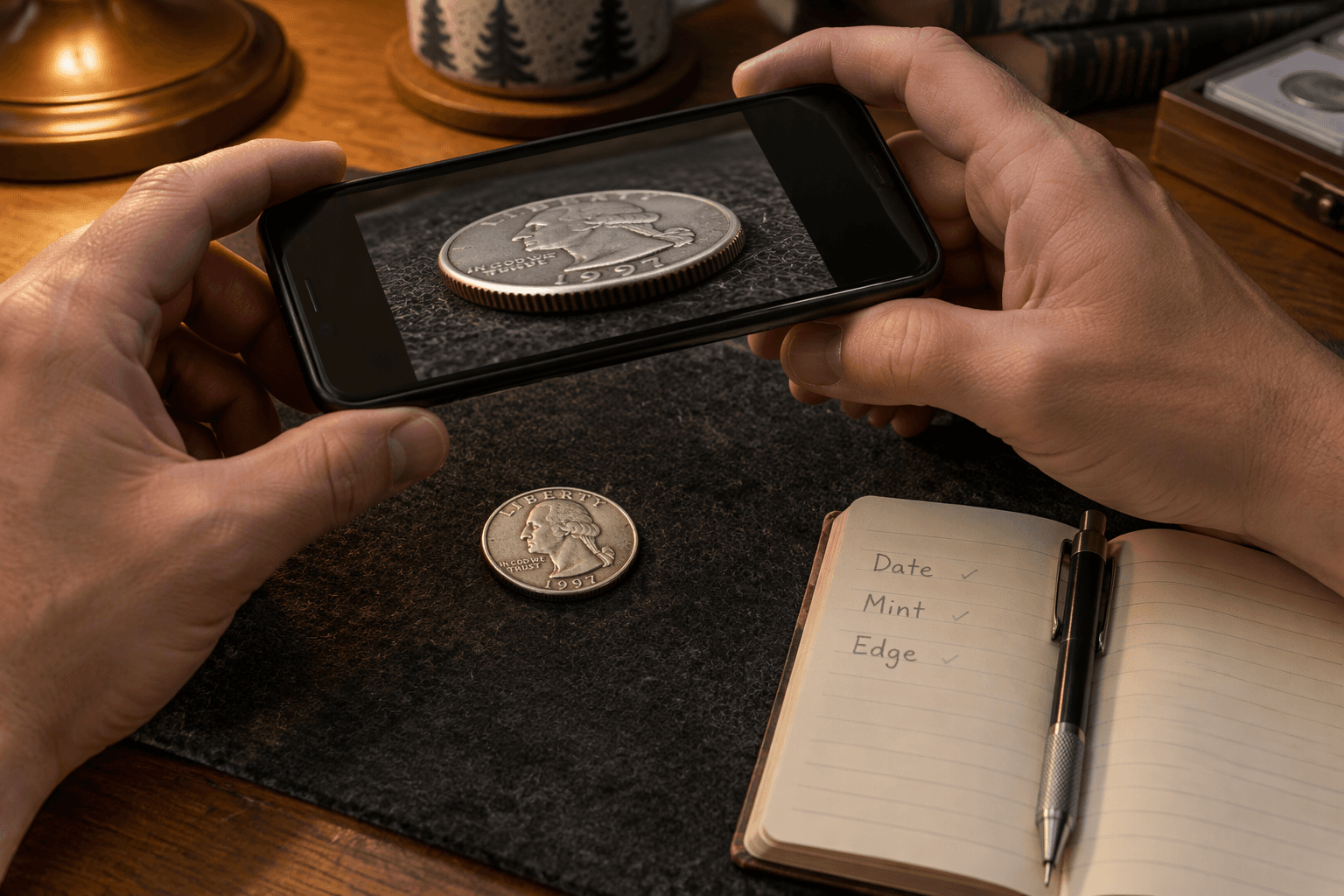
This is also where a private archive earns its keep. If you use Folidx, you can photograph a coin and keep an editable private entry that holds its date, edge observation, and notes together and searchable, with the original photo attached. One honest boundary: Folidx records visible condition clues and organizes what you observe, it does not authenticate the metal inside a coin, so the checklist in this article stays your composition check.
Once a coin is identified and recorded, the next question is usually what it might be worth. That is a different job with different sources, and how to check what your coins are worth walks through it carefully. For the large-format end of the silver family, the Morgan silver dollar guide covers the classic 90 percent silver dollar series.
FAQ
Are half dollars real silver? Halves through 1964 are 90 percent silver. Kennedy halves from 1965 to 1970 are 40 percent silver. From 1971 onward, circulating half dollars contain no silver.
Which years of quarters are silver? Quarters dated 1964 and earlier are 90 percent silver. A 1965 quarter is copper-nickel clad, which you can confirm by the copper stripe on its edge.
Do magnets stick to silver coins? No, silver is not magnetic. But most ordinary clad coins are not magnetic either, so the magnet test rules out steel and obvious fakes rather than confirming silver.
Does the vinegar test work on coins? Not as a safe identification method. It does not cleanly distinguish silver from clad metal, and soaking can alter the original surface of a collectible coin. Use the date, edge, and weight checks instead.
Sources
- How to Know Which US Coins Are Silver, Hero Bullion: date cutoffs by denomination, 1965 to 1970 half dollar rule, war nickel years, quarter weight comparison.
- How to Tell If a Coin Is Silver: A Beginner Guide, Miller's Mint: solid silver rim versus copper-sandwich edge description.
- How to Identify Silver Quarters and Junk Silver, Bullion Exchanges: edge, magnet, ping, and weight test summaries.
- Folidx product boundary,
docs/product-overview.mdsection 2.2: Folidx records visible condition clues and reference information, and does not provide material authentication, grading, or appraisal.